

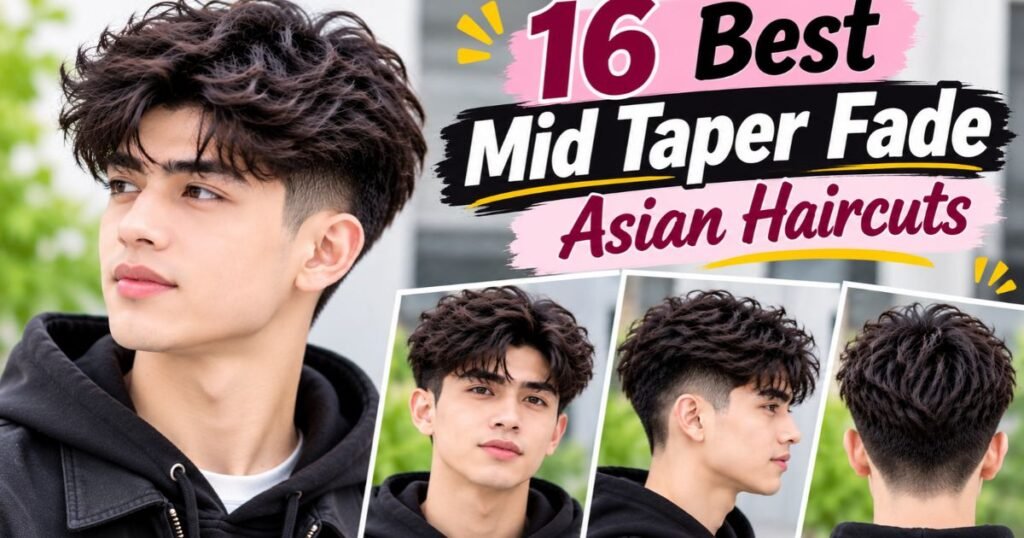
Want a haircut that looks sharp on day one and still looks good in week four? The mid taper fade Asian haircut is built for exactly that. It keeps the sides short and clean, leaves enough length on top to style, and works well with the thick, straight hair that many Asian men have.
This guide covers 16 mid taper fade ideas, from a simple classic cut to Korean-inspired two-block looks. You will also learn how to match a style to your hair type, face shape, and age, how to talk to your barber, and how to keep the cut fresh at home.
Quick answers
- What it is: a cut where the sides and back blend gradually from short to longer, starting around temple height.
- Who it suits: most men, especially those with thick, straight, or medium-density hair.
- What to tell your barber: “Mid taper, clean tapered neckline, and keep the length on top.”
- How often to refresh it: every 3 to 4 weeks for a sharp look.
What Is a Mid Taper Fade Asian Haircut?
A mid taper fade Asian haircut is a short-sides, longer-top cut where the hair on the sides and back gets shorter in a smooth, gradual blend. The blend begins at the middle of the sides, about level with the temple, and ends at the neckline and around the ears.
The word “taper” matters. A taper keeps a little hair at the bottom, so the edge looks soft and natural. A skin fade, by contrast, goes down to bare skin. That makes a taper easier to live with if you want a clean look without a harsh contrast.
The word “Asian” is not a rule about ethnicity. It describes how the cut is usually built for hair that is often thick, straight, and strong. Hair grows differently across East, South, and Southeast Asia, so some men have waves, fine strands, or a lower density. A good barber adjusts the cut to your hair, not to a label.
Here are the parts of the cut you should know:
- Clean tapered sides: the sides get shorter as they move down toward the ears.
- Tapered neckline: the back is shaped in a soft curve so it grows out neatly.
- Textured top: the top stays longer, usually 3 to 10 cm, so you can style it.
- Hair separation: the top is cut or thinned so the sections move and do not sit as one heavy block.
Why Is This Haircut So Popular in 2026?
The mid taper fade Asian haircut has stayed popular because it solves common problems for thick straight hair. Many Asian men deal with hair that stands out at the sides or looks flat on top. A taper removes the bulk from the sides and lets the top look intentional.
Several things are pushing it forward in 2026:
- Korean-inspired hairstyles and K-pop-inspired styling: soft fringes, middle parts, and airy texture are now everyday looks, not stage looks.
- Softer fades: many men now prefer a taper over a hard skin fade because it looks more natural at work and school.
- Low daily effort: a good cut needs two or three minutes of styling.
- Easy grow-out: because the blend is gradual, the cut looks fine for longer between visits.
- Reference photos: social media makes it simple to show a barber what you want.
It also suits many settings. You can wear it to an office, a lecture hall, a gym, or a wedding with only small styling changes.
16 Best Mid Taper Fade Asian Haircut Ideas
Below are 16 Asian men’s hairstyles built on a mid taper. Each one lists the look, who it suits, and one practical styling tip. Use them as Mid taper fade hairstyle ideas to bring to your barber.
Classic and Textured Styles
These three are the easiest place to start. They are simple, tidy, and work for most hair.
1. Classic Mid Taper Fade

This is the cleanest version. The top is short to medium, brushed forward or slightly to the side, and the sides taper neatly.
- Best for: first-timers, students, and office settings.
- Hair type: straight or medium-density hair.
- Styling tip: use a pea-sized amount of matte clay and comb it through once.
2. Textured Top Mid Taper
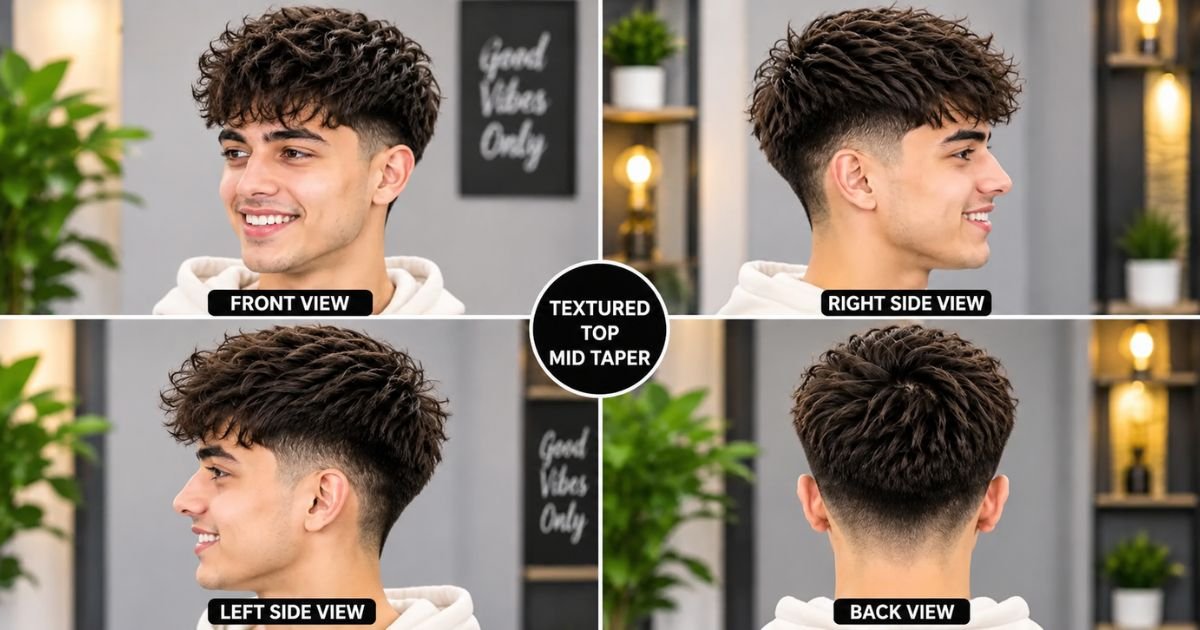
A textured top mid taper has choppy, layered hair on top that creates movement. The barber cuts into the hair with scissors or a razor so the strands do not lie flat.
- Best for: thick straight hair that looks heavy or boxy.
- Styling tip: blow-dry the top upward, then press a matte product through the ends.
3. Messy Mid Taper Fade

The messy mid taper fade looks relaxed on purpose. The top is tousled in different directions while the sides stay tight and tidy. The contrast is what makes it look good.
- Best for: casual days and men who dislike polished looks.
- Styling tip: rub a sea salt spray through damp hair, then scrunch and let it dry.
Korean-Inspired and Two-Block Styles
These styles pull from Korean-inspired hairstyles. They use length on top and a shorter, hidden layer underneath.
4. Korean Two-Block Mid Taper
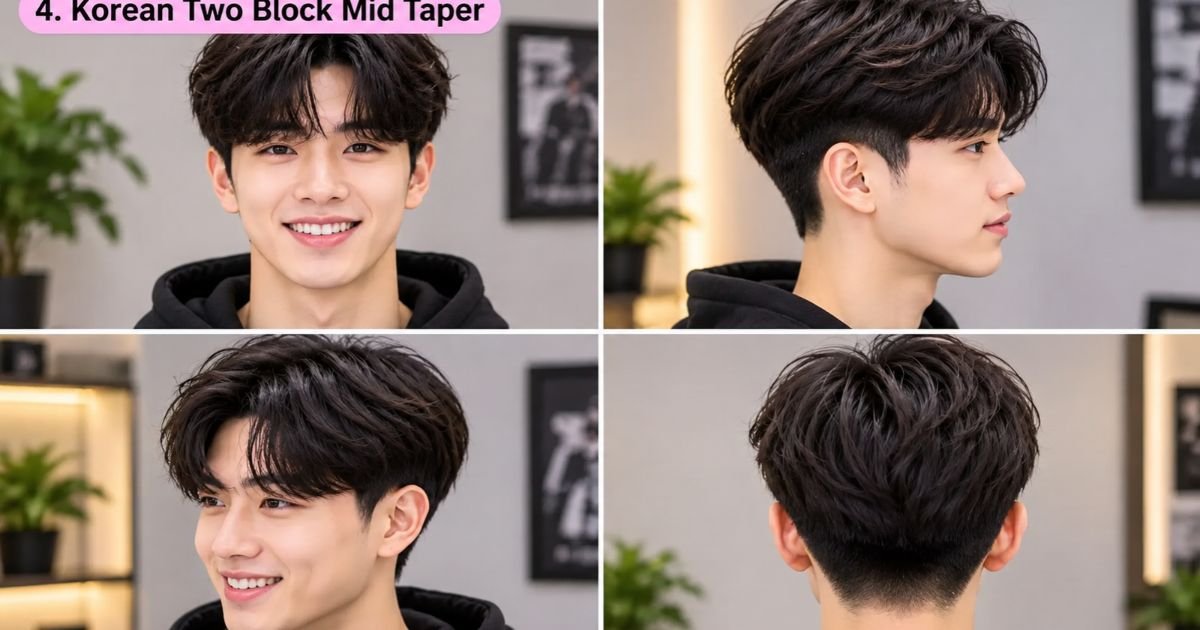
A Korean two-block mid taper joins the Asian two-block haircut with a mid taper. The top is longer and falls over a shorter lower section. The taper makes the transition smoother than a plain two-block.
- Best for: thick hair that needs weight removed.
- Styling tip: dry the fringe forward and slightly down so it sits flat at the front.
5. Middle Part Mid Taper
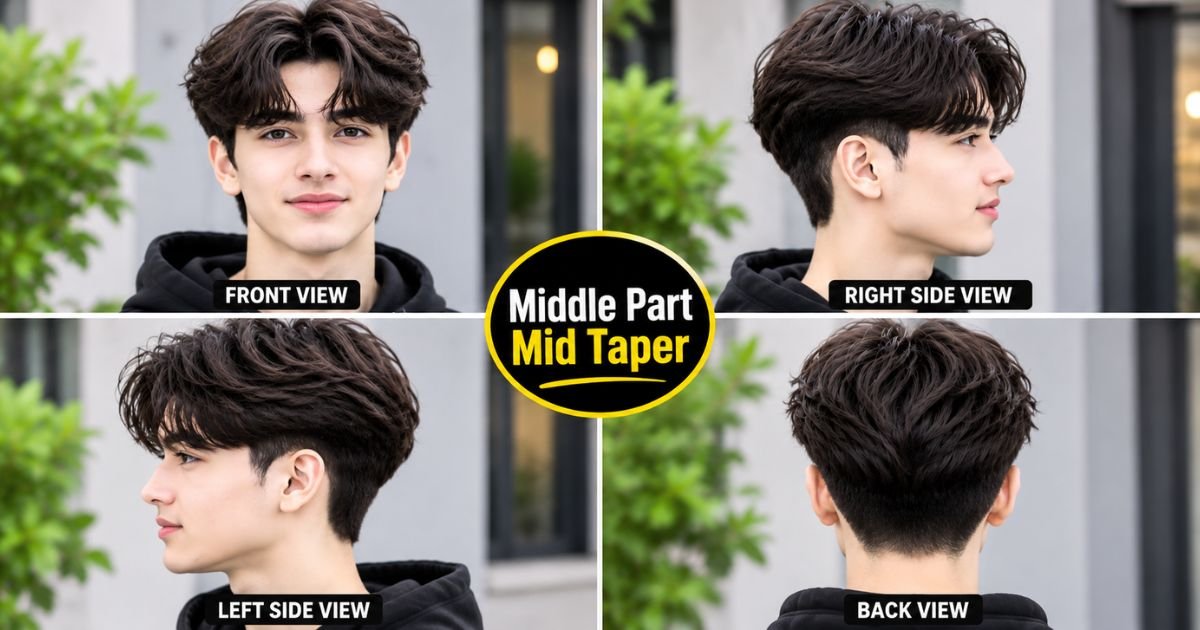
The middle part hairstyle splits the top in the center, and the hair falls to both sides. It looks very clean next to a mid taper.
- Best for: oval and long faces that carry symmetry well.
- Styling tip: part the hair while it is damp and dry it with the part in place.
6. Curtain Fringe Mid Taper

A curtain-style fringe opens in the middle and sweeps toward the temples. It is soft, youthful, and common in Korean-inspired looks.
- Best for: straight hair with enough length, about 7 to 10 cm at the front.
- Styling tip: use a light cream and a round brush to shape the curve.
Fringe and Forward Styles
Fringes cover the forehead and bring balance to certain face shapes.
7. Textured Fringe Mid Taper
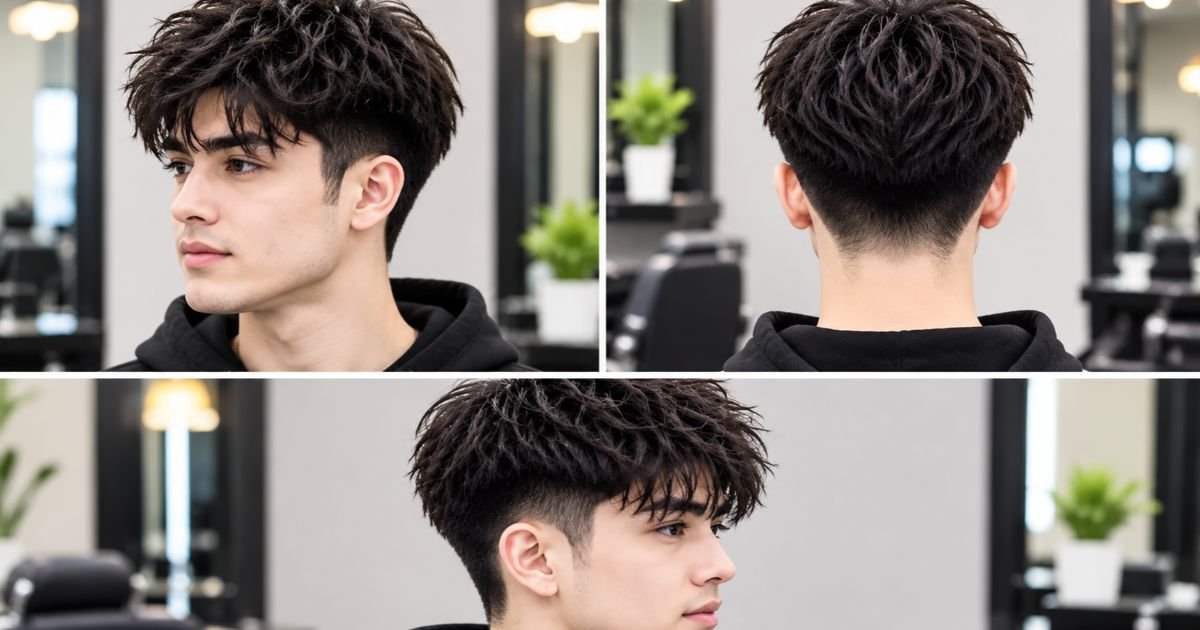
A textured fringe mid taper keeps the front longer and breaks it into soft, uneven pieces. It looks more modern than a straight, blunt fringe.
- Best for: round and square faces, since the broken edge softens the forehead.
- Styling tip: push the fringe slightly to one side, then use your fingers to separate it.
8. Short Fringe Mid Taper
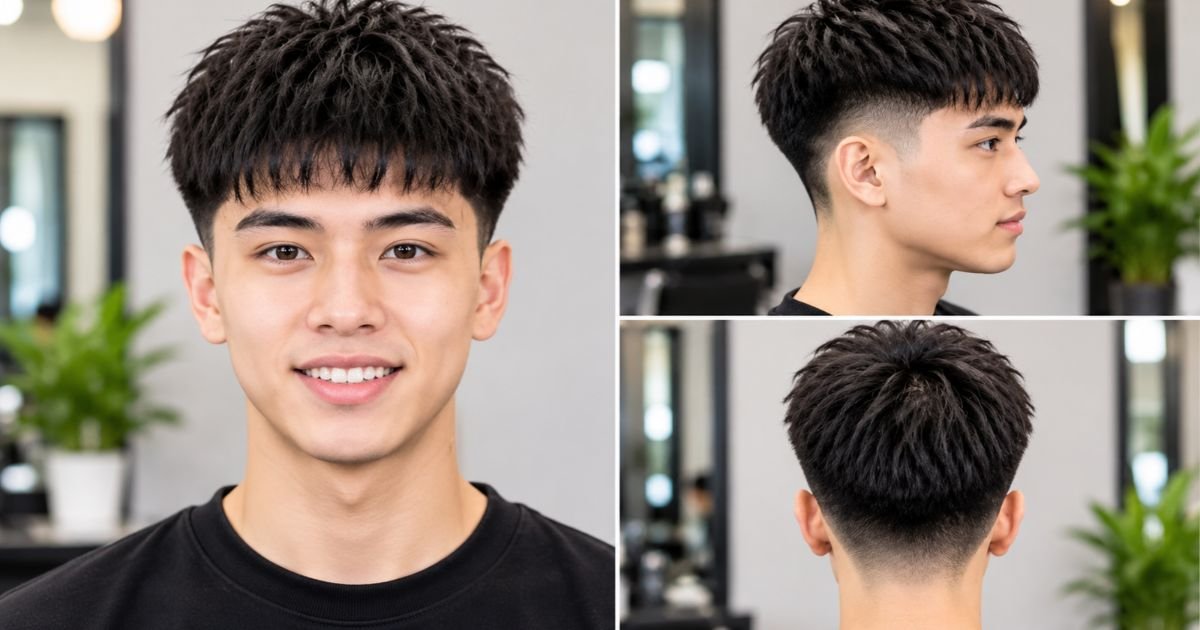
The short fringe mid taper keeps the front just above the eyebrows. It is neat, low-maintenance, and good for men who want a short style with no styling fuss.
- Best for: teenagers, athletes, and busy mornings.
- Styling tip: a light clay on dry hair is enough. Heavy gels make the fringe look stiff.
Volume and Styling Styles
These styles ask for more blow-drying and product, but the payoff is shape and height.
9. Quiff Mid Taper
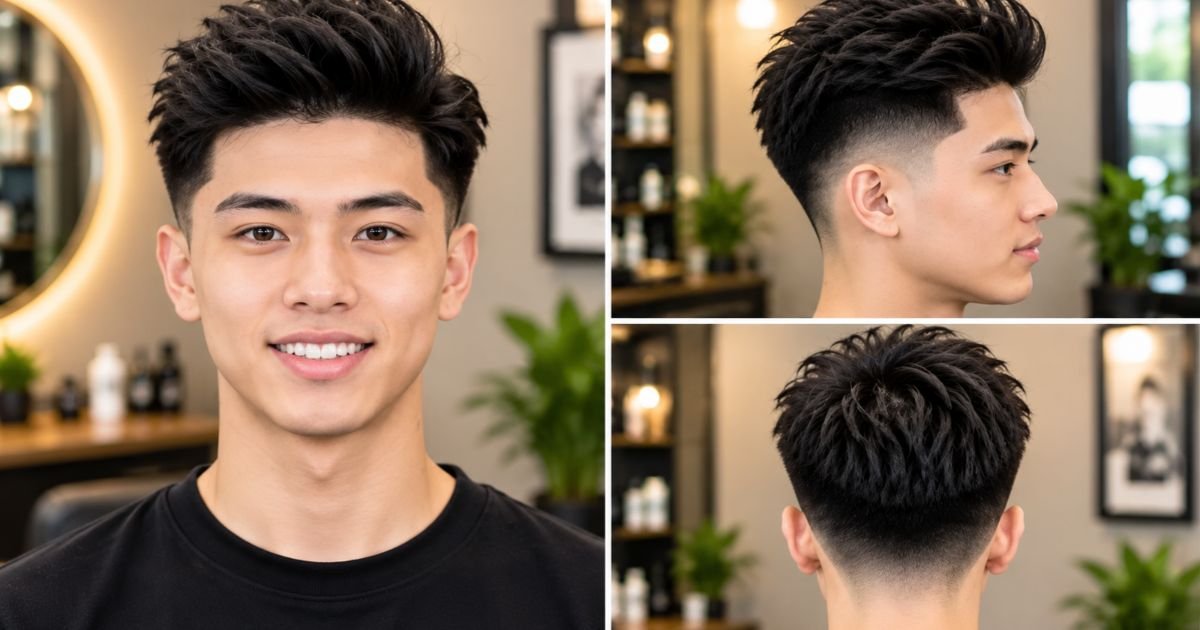
The quiff mid taper lifts the front upward and back. The taper keeps the sides slim, so the volume on top stands out.
- Best for: round faces that need added height.
- Styling tip: blow-dry the front up and back with a vent brush, then lock it in with a medium-hold paste.
10. Fluffy Mid Taper
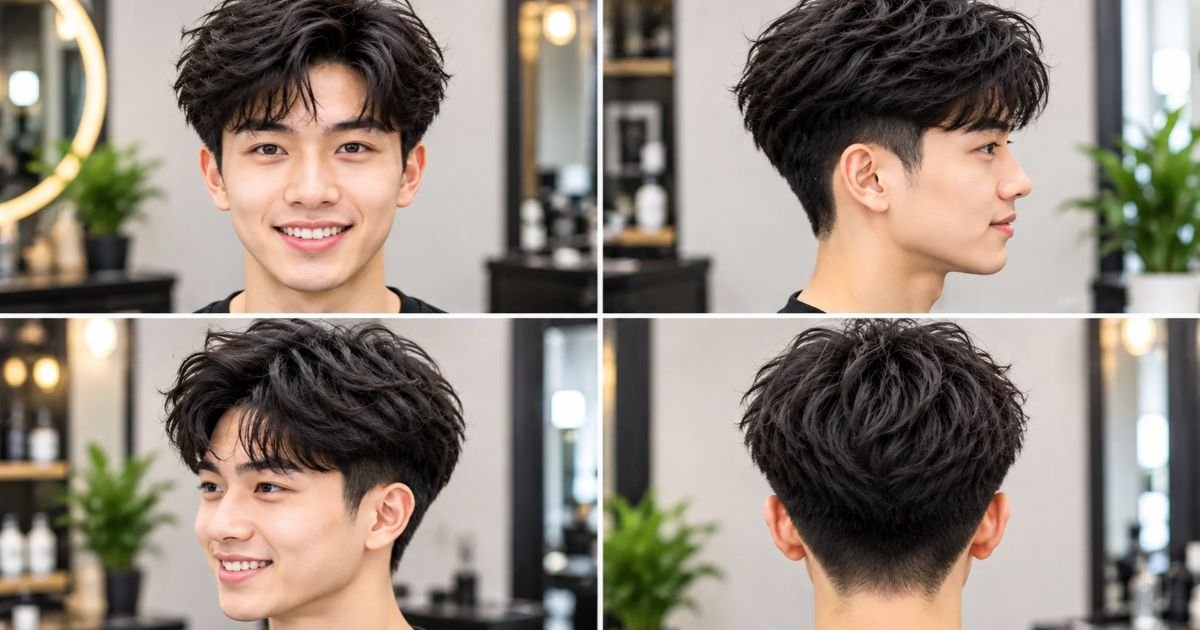
The fluffy mid taper is soft and airy. The top has volume without hard styling, so it moves when you walk.
- Best for: fine Asian hair that needs body, and medium-density hair.
- Styling tip: use a volumizing powder at the roots and skip heavy waxes.
11. Blowout Mid Taper

A blowout mid taper uses a blow-dryer to push the top up and slightly forward. It gives a full, polished shape and is popular in Korean salons.
- Best for: men who like volume and have 6 to 9 cm on top.
- Styling tip: apply a heat protectant, then dry in sections and finish with cool air to set the shape.
Clean and Longer Mid Taper Fade Asian Styles
These cuts look more refined. They suit work settings, events, and men who want longer hair without losing neatness.
12. Slick Back Mid Taper
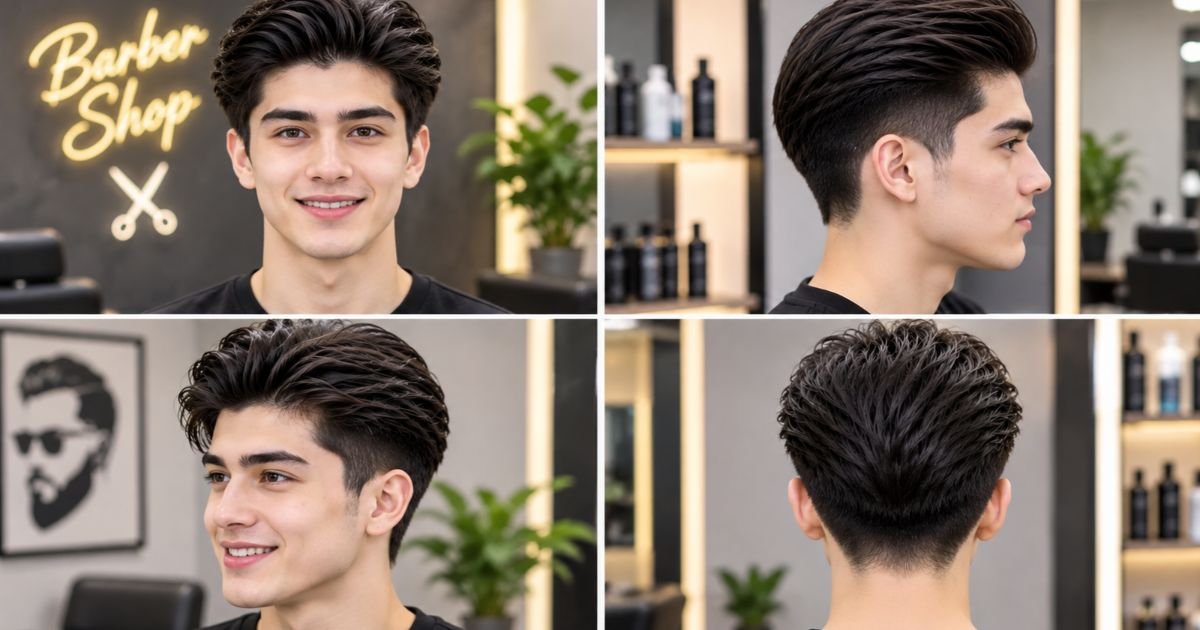
The slick back mid taper pulls the top backward for a sharp, grown-up shape. Because Asian hair is often thick and straight, a medium-hold product helps it stay in place.
- Best for: professional men and formal events.
- Styling tip: comb the hair back while damp, then add a water-based pomade.
13. Side Part Mid Taper
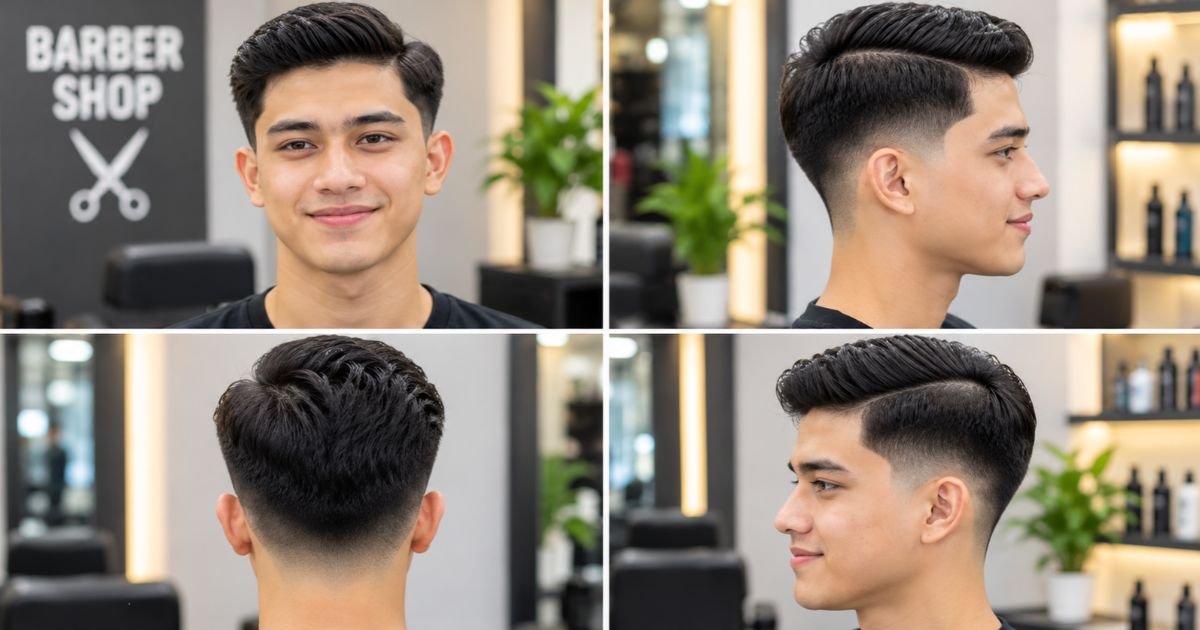
The side part mid taper combines a clean parting line with tapered sides. It is a timeless pick and easy to defend in any dress code.
- Best for: oval, square, and rectangular faces.
- Styling tip: find your natural part by brushing your hair straight back, then comb it to the side where it falls.
14. Long Top Mid Taper
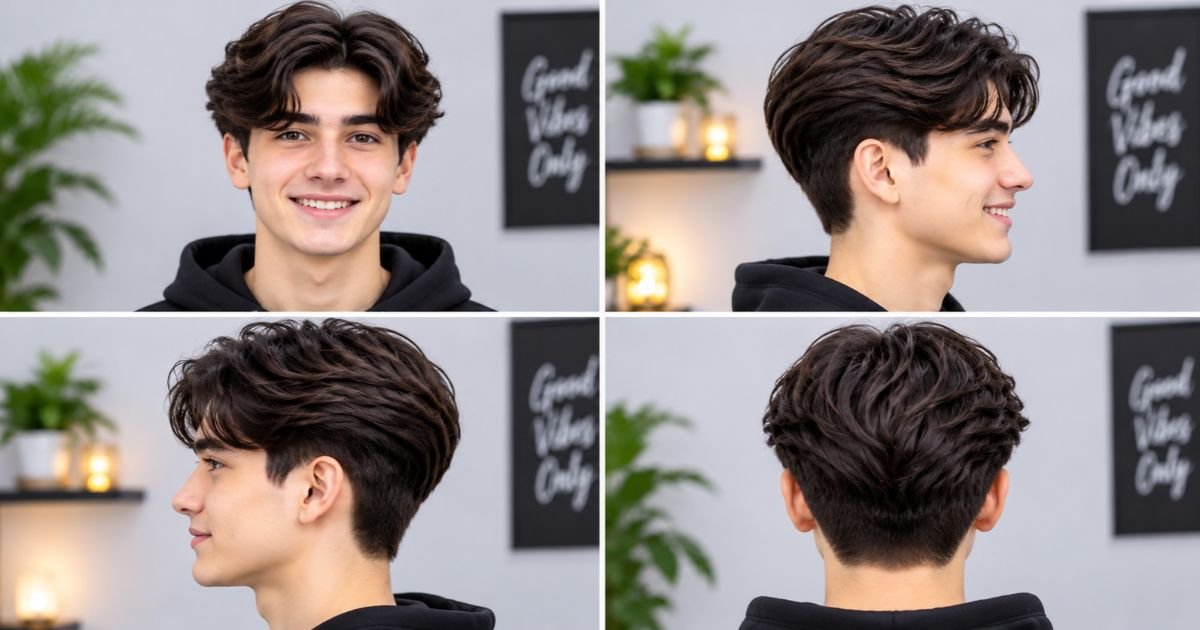
The long top mid taper keeps 10 cm or more on the top and tapers the sides. It is a good way to grow your hair out without looking messy.
- Best for: wavy hair, or men who want a layered, flowing top.
- Styling tip: ask for light layers, so the longer top does not look heavy.
15. Low-Volume Natural Mid Taper

This one is the simplest to wear. The top follows your natural hair texture and sits close to the head. It is a natural mid taper fade with very little styling.
- Best for: men who want almost no routine.
- Styling tip: use a tiny amount of lightweight cream on damp hair and let it air-dry.
16. Short Textured Crop Mid Taper
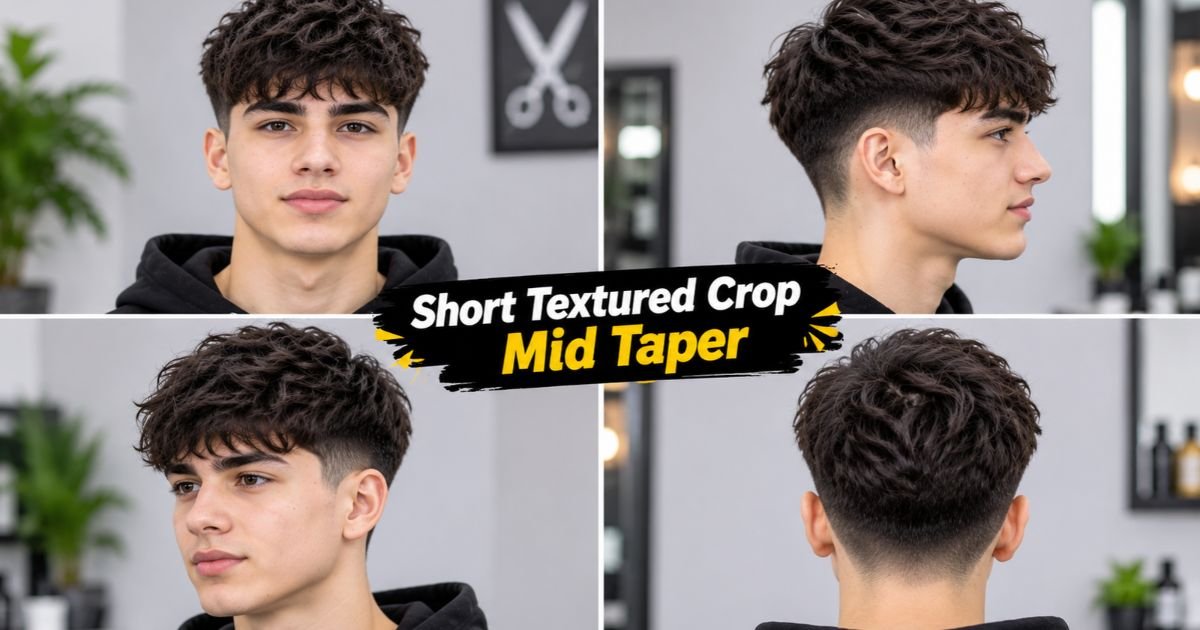
The textured crop keeps the top short, around 3 to 5 cm, with a blunt, choppy fringe. The mid taper cleans up the sides, so the whole cut looks tidy.
- Best for: men with a busy schedule and thick hair.
- Styling tip: work a pinch of matte clay into dry hair and tug the ends forward.
Quick Comparison of the 16 Styles
Use this table to compare the styles at a glance.
| Style | Top length | Styling effort | Best hair type |
| Classic mid taper | Short to medium | Low | Straight, medium density |
| Textured top | Medium | Medium | Thick |
| Messy | Medium | Low | Straight or wavy |
| Korean two-block | Medium to long | Medium | Thick |
| Middle part | Medium to long | Medium | Straight |
| Curtain fringe | Medium to long | Medium | Straight |
| Textured fringe | Medium | Low | Thick or wavy |
| Short fringe | Short | Low | Straight |
| Quiff | Medium to long | High | Medium, thick |
| Fluffy | Medium | Medium | Fine |
| Blowout | Medium | High | Straight, fine |
| Slick back | Medium to long | Medium | Thick |
| Side part | Medium | Medium | Most types |
| Long top | Long | Medium | Wavy |
| Low-volume natural | Short to medium | Very low | Any |
| Short textured crop | Short | Low | Thick |
How to Choose the Right Style for Your Hair Type
Your hair type matters as much as the style you saw online. A cut that looks great on thick hair can fall flat on fine hair. Start here before you pick a photo.
Straight Hair
Straight hair holds sharp shapes well, so it works with a middle part, curtain fringe, or slick back. The downside is that it can look flat. Ask for texture or light layers on top, and use a matte product.
Wavy Hair
Wavy hair gives you built-in movement. Long top styles and messy cuts look natural on it. Avoid cutting the top too short, because waves can spring up and look uneven. A little cream controls the frizz.
Thick Hair
Mid taper fade thick hair is a very common pairing. Thick hair tends to puff out at the sides, so a taper reduces that bulk right away. Ask your barber to thin the top with texturizing cuts so it does not feel heavy.
Fine Hair
Fine Asian hair loses volume quickly. Keep the top at medium length, because very long hair on fine strands looks thin. Fluffy and blowout styles work well. Use lightweight products and avoid heavy wax.
Medium-Length Hair
Medium-length hair, around 5 to 8 cm on top, is the easiest to style. It can go in almost any direction. Quiffs, side parts, and textured fringes all work at this length.
Best Mid Taper Fade Asian Styles by Face Shape
Face shape guides how much height, width, and fringe you need. The goal is balance. Use these ideas as a starting point, then adjust with your barber.
Oval Face
An oval face suits almost everything. Try a classic cut, middle part, or slick back. You have the most freedom here.
Round Face
Round faces look better with height and angles. A quiff or textured top adds length. Avoid heavy, flat fringes that make the face look wider.
Square Face
A square jaw is already strong. Softer styles like a textured fringe or side part balance it. Keep the top slightly messy to soften sharp corners.
Heart Face
A heart-shaped face has a wider forehead and a narrower chin. A curtain fringe or textured fringe softens the forehead. Do not go too tight at the temples.
Long Face
A long face needs less height. Choose a fringe, a side part, or a short crop. Skip tall quiffs, since they stretch the face further.
Diamond Face
Diamond faces have broad cheekbones. A side-swept fringe or textured top adds balance at the forehead. Keep the sides slim but not too short.
Rectangular Face
Rectangular faces are similar to long faces, but with a squarer jaw. Add volume on the sides with a blowout or fluffy cut, and use a fringe to shorten the forehead.
Best Mid Taper Fade Asian Styles by Age Group
The same cut can look different at different ages. Here is how to adjust it.
Teenagers
Teens can try bold looks because school dress codes are usually relaxed about hair. A Korean two-block mid taper, a fluffy cut, or a short fringe works well. Keep the styling simple so it is easy to repeat before class.
Young Men
Young men in their 20s and early 30s can mix creativity and polish. Textured fringes, blowouts, and quiffs are strong picks. A bit of volume gives a modern, confident look.
Professional Men
In professional settings, clean and controlled wins. A classic cut, side part, or slick back looks neat in meetings. Choose a matte or low-shine product and keep the neckline tidy.
How to Ask Your Barber for a Mid Taper Fade
Many bad haircuts come from unclear instructions. Barbers use different words, and a “mid fade” for one barber is a “mid taper” for another. Clear details help.
Follow these steps:
- Bring two or three reference photos. Show the front, side, and back if you can. Photos beat words.
- Say “mid taper” first. Add “clean tapered neckline” and “no skin” if you do not want a skin fade.
- Name the top length. Use your fingers or a ruler. For example, “about 6 cm on top.”
- Ask about clipper guard lengths. Many barbers start around a #1 or #2 at the bottom and blend up to a #3 or #4 near the temple. This differs from barber to barber, so confirm it.
- Describe the styling. Say if you want a fringe, part, or volume.
- Check the haircut proportions. Ask the barber to keep the top balanced with the sides so your head shape looks even.
- Confirm the neckline. Choose a tapered neckline for a natural grow-out or a squared one for a sharper edge.
Sample script: “I would like a mid taper, tapered neckline, no skin. Keep about 6 cm on top, with texture and a curtain fringe. Here are my photos.”
Mid Taper Fade Tutorial: Video Guide
A video helps you see how the blend moves from short to long. If you plan to cut your own hair or just want to speak your barber’s language, watch a tutorial from a licensed barber.
(Editor note: embed your chosen tutorial video here. Pick a recent video that shows the full process.)
When you watch, pay attention to these points:
- How the barber sets the fade line at the temple.
- How the clipper guards change as the cut moves up the head.
- How the barber uses a comb to blend the edges.
- How the neckline is shaped last.
Do not try a first-time DIY fade right before an important event. Practice on a back section first, or leave the blend to a pro.
Common Mid Taper Fade Mistakes to Avoid
These are mistakes made by the person wearing the cut, not the barber.
- Choosing a style only from a photo. A model’s hair may be thicker or straighter than yours.
- Using heavy wax on thick hair. It makes the top look greasy and stiff.
- Skipping blow-drying. Straight hair often needs a few minutes of heat to keep volume.
- Waiting too long between cuts. A taper looks messy after 5 or 6 weeks.
- Ignoring your face shape. Too much volume on a long face or flat hair on a round face can look off.
- Washing with hot water. Heat can dry the scalp and make hair frizz.
Common Barber Mistakes to Avoid
Know what a good cut looks like so you can spot problems early.
- Starting the fade too high. If the blend sits above the temple, you get a high taper, not a mid taper.
- Leaving a harsh line. A good taper blends softly. Visible steps or lines mean the barber needs to blend further.
- Cutting the top too short. Ask the barber to cut a little at a time so you keep the length you want.
- Uneven sides. Check both sides in a mirror before you leave.
- A rushed neckline. A neckline that is too square can look sharp for a day and awkward after a week.
- Ignoring hair direction. Asian hair often grows in strong patterns, such as a crown swirl. The barber should cut with it, not against it.
How to Maintain a Mid Taper Fade Asian Haircut
Maintenance is simple, but it needs some routine. Hair grows about 1 to 1.5 cm each month, so the taper loses its shape fast on short sides.
Taper Maintenance
Book regular taper touch-ups every 3 to 4 weeks. If you like a very tight look, go every 2 to 3 weeks. If you prefer a softer grow-out, 4 to 5 weeks is fine.
Daily Styling
Build a short daily styling routine. Towel-dry, add a heat protectant if you plan to blow-dry, dry the top in your preferred direction, then add a small amount of product. Most men finish in under five minutes.
Shampoo and Conditioner
Shampoo two or three times a week. Use conditioner on the lengths, especially if your top is long. Thick Asian hair can feel dry at the ends.
Heat Protection
If you blow-dry every day, use a heat protectant spray. It reduces damage from the dryer and keeps hair smoother.
Satin Pillowcase
A satin pillowcase reduces friction while you sleep. This helps with frizz and keeps the top from flattening or tangling.
Sulfate-Free Products
Sulfate-free shampoo cleans more gently and helps hair keep its natural oils. It is a smart choice if your scalp feels tight or dry after washing.
Best Products to Style a Mid Taper Fade Asian Haircut
The right product changes how a cut looks and feels. Pick based on your hair type and the finish you want.
- Matte clay: good for thick hair and textured tops. It gives hold without shine.
- Lightweight cream: best for fine hair, fluffy styles, and natural looks.
- Sea salt spray: adds grit and volume for messy and textured cuts.
- Volumizing powder: lifts roots on quiffs and blowouts.
- Water-based pomade: suits slick backs and side parts, and washes out easily.
- Heat protectant: a must if you blow-dry.
A matte styling product is the safest default for most Asian hair. It hides shine and keeps the cut looking natural. Use a small amount first. You can always add more, but removing product means washing your hair again.
Also Read This : Mid Taper with Dreads
Best Occasions for a Mid Taper Fade Asian Haircut
One reason this cut works so well is how easily it changes for different places.
- Office or interviews: a side part or classic cut with a matte finish.
- School or college: a short fringe or fluffy mid taper with a quick routine.
- Weddings and events: a slick back or quiff for a sharper look.
- Gym and sports: a short crop or low-volume natural style that stays out of your eyes.
- Casual weekends: a messy or textured fringe look.
Mid Taper Fade vs Other Haircuts
Barbers use many similar terms, and the differences are small. This section explains them in plain language.
Mid Taper Fade vs Low Taper
A low taper starts near the ears and neckline, so it looks subtle. A mid taper starts higher, around the temple, so the contrast is stronger. Choose a low taper for a conservative look and a mid taper for a bit more shape.
Mid Taper Fade vs Mid Fade
A mid fade also starts around the temple, but it usually goes shorter, often down to skin. A taper keeps some length at the bottom, so it looks softer. If you want a gentle blend, pick the taper. If you want a sharper, high-contrast cut, pick the fade.
Mid Taper Fade vs Two-Block
A two-block is about how the top and the lower layer are cut, with a clear length difference between them. A mid taper is about how the sides blend. You can combine both, as in the Korean two-block mid taper above.
Mid Taper Fade vs Undercut
An undercut has short sides with no gradual blend, so there is a visible line where long meets short. A mid taper blends smoothly. The undercut is bolder, while the taper looks cleaner and ages better as it grows out.
Frequently Asked Questions
What is a mid taper fade Asian haircut?
It is a short-sides, longer-top cut where the sides blend gradually from short to long, starting near the temple. It is styled to suit the thick, straight hair many Asian men have.
Does a mid taper fade work on thick straight Asian hair?
Yes. The taper removes bulk from the sides, and texture on top keeps the cut from looking heavy or flat.
How often should I get a mid taper fade?
Every 3 to 4 weeks keeps the shape sharp. You can stretch to 5 weeks if you like a softer, grown-out look.
What is the difference between a mid taper and a mid fade?
A mid taper keeps some hair at the bottom and blends softly. A mid fade usually goes shorter, sometimes to skin, and looks sharper.
What should I tell my barber?
Say “mid taper with a tapered neckline,” give your top length, and bring reference photos. Mention if you want no skin showing.
Can I get this cut with fine Asian hair?
Yes. Keep the top at medium length, use lightweight products, and try a fluffy or blowout style for volume.
Which face shape suits a mid taper fade best?
Oval faces suit almost every version. Other shapes work too when you adjust the top, such as height for round faces or a fringe for long faces.
Is a mid taper fade professional enough for work?
Yes. A classic cut, side part, or slick back with a matte finish looks neat in most offices.
Conclusion
The mid taper fade Asian haircut earns its place because it is flexible. It cleans up thick sides, supports many top styles, and grows out well. Whether you want a quick short fringe, a Korean two-block look, or a polished slick back, there is a version that fits your hair and your week.
Start with your hair type and face shape, pick two or three reference photos, and give your barber clear details about the top length and the neckline. Then keep up with a touch-up every few weeks and a simple styling routine. Do that, and your cut will look sharp long after you leave the chair.
