

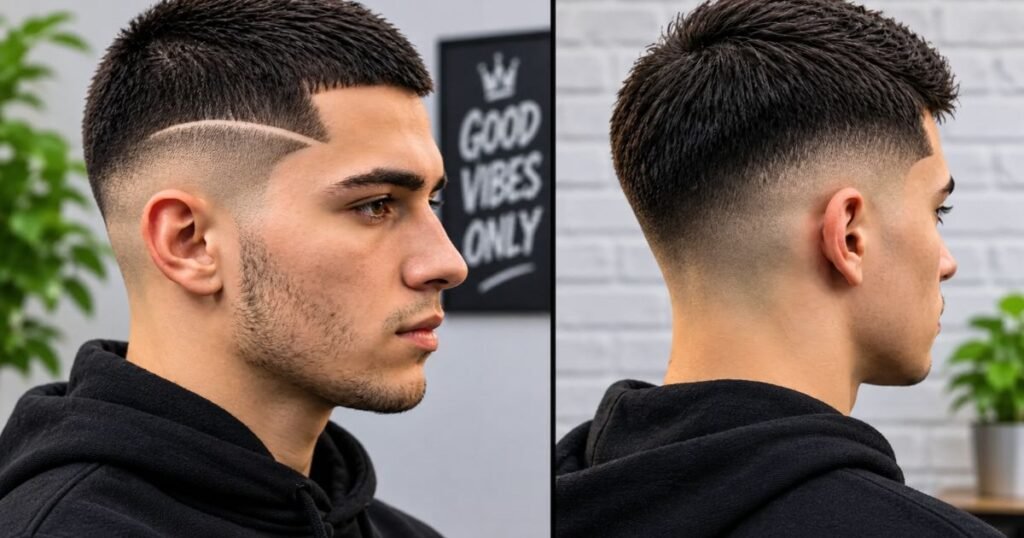
Two guys can walk out of a barbershop with cuts that look similar from the front. One got a temple fade. The other got a taper. By the end of week two, they look nothing alike.
The names get mixed up all the time, even by barbers. That is why people leave with a cut they did not ask for. This guide fixes that. You will learn what each cut is, where the fade starts, which guard numbers to request, and how much upkeep each one really needs.
Quick answer: A temple fade is a short, sharp fade that sits in one small zone around the temples and sideburns, usually finished with a crisp line. A taper fade is a smooth gradient that follows the sides and back of the head down to the neckline. The temple fade looks bolder and needs a touch-up about every 2 weeks. The taper fade looks softer and stays neat for 3 to 4 weeks.
Temple Fade Explained: Sharp Lines in One Small Zone
A temple fade is a fade that lives at the temples. The hair around the sideburns and the front corners of the sides is cut very short, often down to skin. Everything else stays longer.
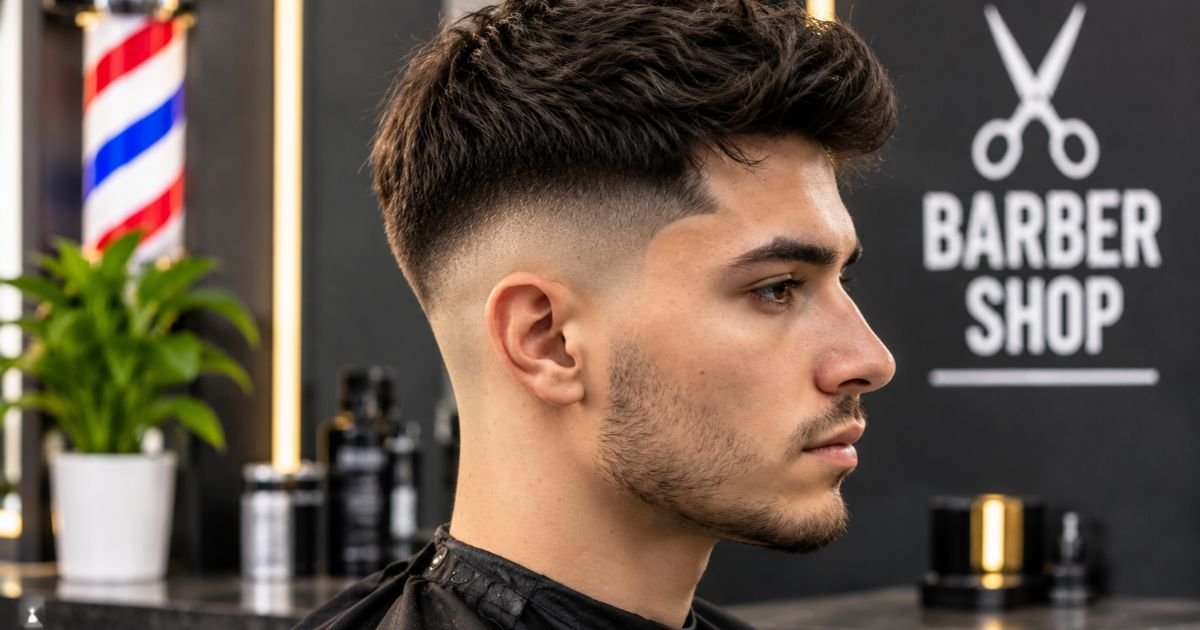
Most people also call it a temp fade. You will hear the Brooklyn fade and the “blowout” used for the same look, too. Barber vocabulary changes by city and by shop, so the names are not fully standardized.

What makes this cut stand out is the defined temple line. Instead of a long, lazy blend, you get a small area where the hair drops from short to nearly nothing. The line is clean, and it frames the face.
A typical version includes:
- A tight cut at the temples, with a sharp fade line where the short hair meets the longer hair
- A hairline lineup across the forehead, so the front looks crisp
- Clean temples and sideburns
- Longer hair left on the sides and back of the head, often with a lightly faded or tapered neckline
The effect is a defined hairline with a lot of impact. A small area of tight work makes the entire cut look intentional. That is why it works so well with high-volume tops like an afro, a curly top, or a blowout.
The trade-off is that the sharp edge shows its age fast. A few days of regrowth softens the line, and a week later it looks fuzzy.
Taper Fade Explained: The Smooth Gradient That Goes Everywhere
A taper fade is built on blending. The hair gets gradually shorter as it moves down the sides and around the back. There is no hard stopping point. The result is a smooth gradient that wraps around the head.
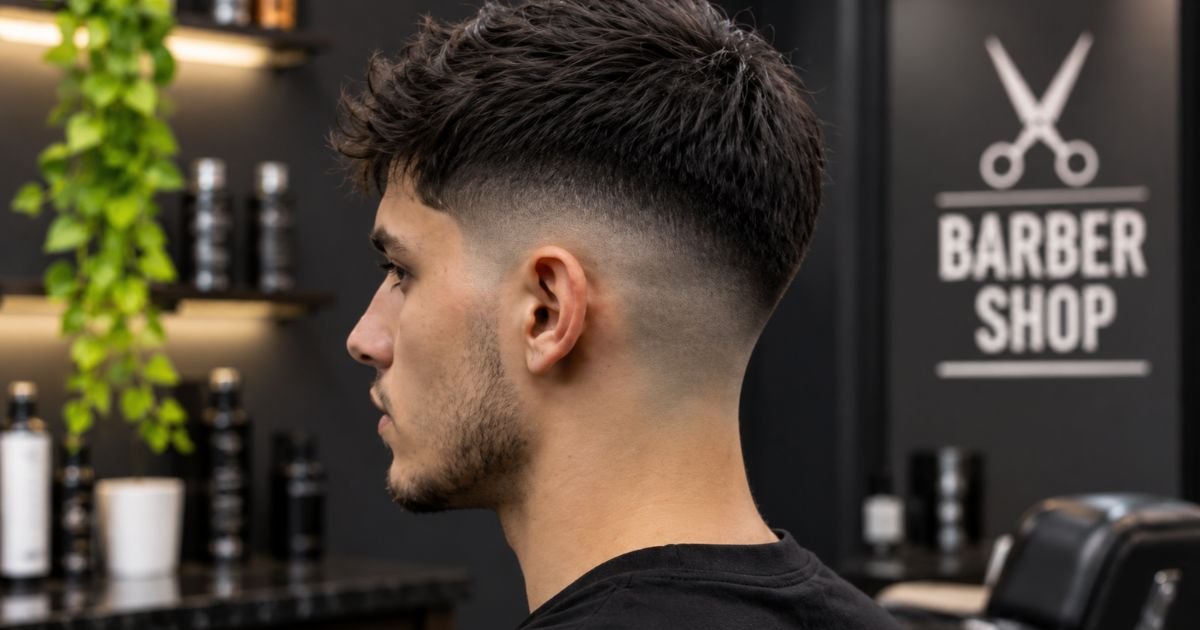
The word “taper” simply means the hair gets shorter in steps. Add “fade” and you get a gradual hair blend that finishes at a short length around the ears and neckline.
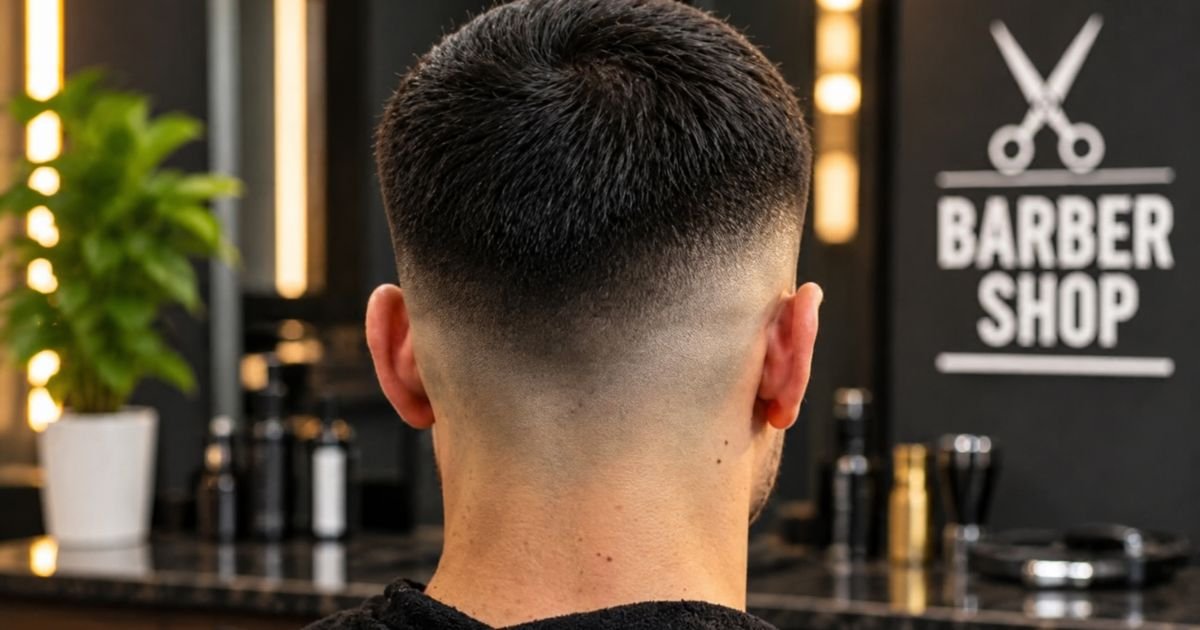
You can place a taper fade at three heights:
- Low taper fade: The blend stays near the ears and neckline.
- Mid taper fade: The gradient starts around the middle of the sides, roughly above the ears.
- High taper fade: The blend begins up near the crown, which makes it more dramatic.
Because the transition is spread over a large area, the cut reads as smooth and polished. There are no stark lines to break up. That makes it a popular professional hairstyle for office jobs, school, and weddings.
A taper fade haircut also grows out well. Without a hard line to blur, it still looks tidy at three or four weeks. For many men, that is the whole reason to pick it.
One warning. The phrase “taper fade” is loose. One barber may give you a classic taper that never shows skin. Another may give you a low skin fade. This is why guard numbers and photos matter. We will get to them shortly.
Temple Fade vs Taper Fade: Key Differences
Here is the temple fade vs taper fade comparison in one view.
| Feature | Temple Fade | Taper Fade |
| Where the fade sits | Temples and sideburns only | Sides and back, down to the neckline |
| Look | Sharp, with a visible line | Smooth, with no harsh lines |
| Contrast | High in one small area | Soft and even |
| Common shortest length | Skin or a #0 to #1 guard | A #1 to #2 guard, or skin at the neckline |
| Best for | Bold, clean, defined looks | Classic, professional, easy looks |
| Touch-up schedule | About every 2 weeks | About every 3 to 4 weeks |
| Grow-out | Line gets fuzzy fast | Grows out gracefully |
| Barber skill needed | High, since the line must be even | Moderate to high, since blending takes patience |
Now let us break down the biggest gaps.
Coverage. One is local and the other is global. The temp cut focuses on a small zone, while the taper covers the whole perimeter.
Edge style. The temple version usually comes with a visible line. The taper hides its line inside a blend.
Visual impact. Contrast grabs attention on the temple cut. The taper supports the overall look instead of becoming the star.
Upkeep. Short, sharp work needs frequent attention. Softer blending forgives time.
Versatility. A taper works almost everywhere. The temp cut shines in more fashion-forward settings, though many offices accept it too if the top is neat.
Why the names overlap. Barbering terms grew up in different shops and cities, so one word can mean two things. “Taper” can mean a light trim at the neckline, or it can mean a full blend. “Temp” can mean a tiny edge-up, or a proper fade with a line. Some barber training guides draw the line by placement: a taper only shortens the perimeter, while a fade covers more of the head. That is why showing a photo beats trusting a name.
Some men also confuse both with a plain skin fade or a bald fade. Those cuts take the sides all the way to the skin over a long stretch. The temple cut does not do that. It only works the temples and edges.
Mid Temp Fade vs Mid Taper Fade: Where the Confusion Lives
This is the point where most people get lost. “Mid” tells you the height of the fade. It does not tell you the shape.
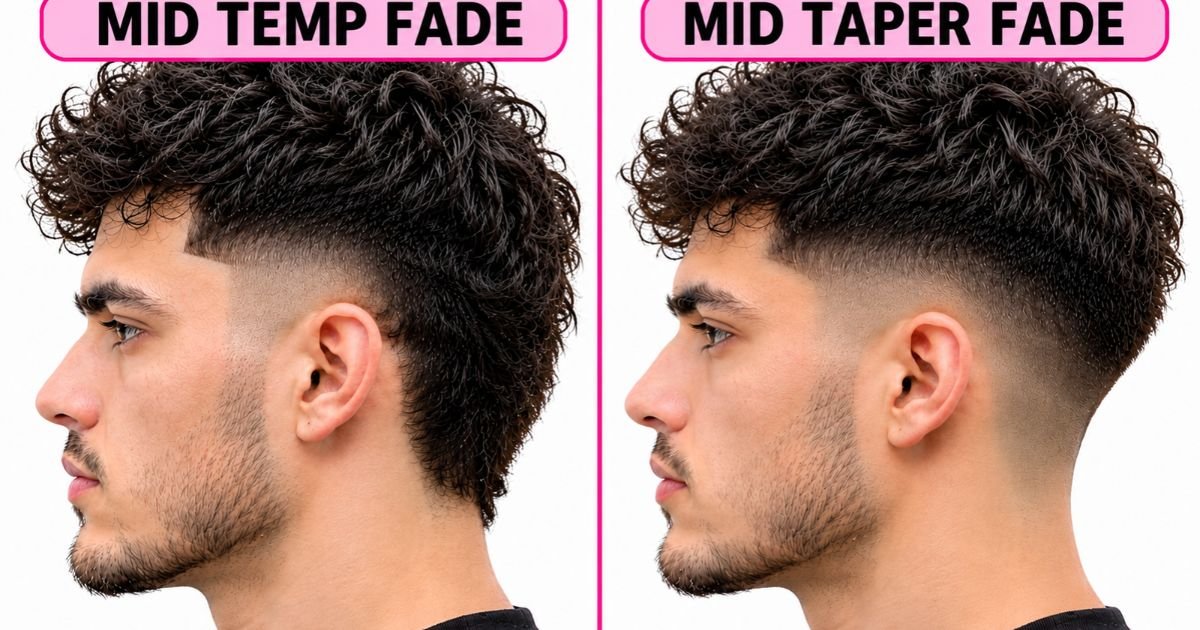
A mid temp fade starts the fade at mid height around the temple area and is usually finished with a line. It is a mid level fade with a visible edge. The key is that the fade stays focused on the temple zone and the front of the sides.
A mid taper fade starts the gradient halfway up the sides and moves down in a long, soft flow. The area it covers is bigger, and the look is more blended.
Here are the main differences:
- Shape: Mid temp fade is short and local. Mid taper fade wraps around.
- Edge: Mid temp fade often has a crisp line. Mid taper fade melts into the hair above.
- Mood: Mid temp fade feels sharp. Mid taper fade feels clean and balanced.
- Upkeep: Mid temp fade needs touch-ups sooner.
You can also adjust the height. A high temple fade pushes the start of the fade higher up the temple and makes the face look more open. A low temple fade keeps it close to the sideburn for a gentler look. Most men who want a safe, balanced choice stay in the middle.
Why does the confusion happen? Because in many shops, “temp” and “taper” are tossed around as if they mean the same thing. Some barbers call a taper with a lineup a temp fade. Some call a temp fade a taper because it tapers at the temples. Both names are partly right.
The fix is simple. Say where the fade starts, how short it goes, and whether you want a line or a blend. You will find word-for-word scripts later in this guide.
Which One Should You Get? Match It to Your Face, Hair, and Lifestyle
Do not choose by trend alone. Choose by three things: face shape, hair type, and how often you will visit the barber.
On face shape, both cuts help remove bulk from the sides. A round face shape looks narrower when the sides are tight, and the temple version does this the strongest. An oval face shape can pull off almost anything. A square face shape already has strong angles, so a softer taper keeps things balanced. A heart shaped face often looks best with a low taper, because a very sharp, high cut can make the forehead look wider.
Hair type and density matter too. Thick, coily hair holds a sharp line well and hides small slips. Fine, straight hair shows every gap, so a softer blend is more forgiving. Very thin hair near the temples can make a tight line look harsh, so ask for a lighter edge instead.
Get the Temple Fade If
- You want a crisp hairline that stays in sharp focus
- You have a lot of volume or texture on top and want contrast
- You like a bold look and do not mind frequent barber visits
- You wear an afro fade, curly top, or blowout style
- You want your face to look more defined at the front
- You are happy to do light temple cleanup at home between visits
Get the Taper Fade If
- You want a clean, professional hairstyle for work or school
- You prefer a low maintenance haircut that lasts longer
- You have thin or fine hair and want a softer transition
- You like longer styles on top, such as a quiff or side part
- You want something that looks neat during grow-out
- You are trying a fade for the first time
Can’t Decide?
Ask yourself one question: “How many days can I go before the cut bothers me?”
If the answer is under ten days, you are a temple person. If it is three weeks or more, pick the taper.
Still torn? Try a hybrid. Ask for a taper with a light shape-up at the temples. You get a smooth blend plus a small dose of sharpness. It is a good middle ground, and most barbers know how to do it.
Guard Numbers: What to Ask For
Guard numbers are where miscommunication happens. A hair clipper guard number is a plastic clipper attachment that sets how much hair stays after the cut. A higher number leaves more hair.

Here is the usual scale for standard clipper combs:
| Guard | Approximate length |
| Bare blade (often called a #0) | About 1 mm, or close to skin |
| #1 | 3 mm (1/8 inch) |
| #2 | 6 mm (1/4 inch) |
| #3 | 9 mm (3/8 inch) |
| #4 | 12 mm (1/2 inch) |
Brands differ a little, and many barbers use half sizes like 0.5 and 1.5. So treat these as close estimates.
Here is how the numbers usually apply:
- Temple version: The shortest point is typically skin or a number 0 guard, with a #1 above it. This creates the skin tight fade at the temples.
- Taper version: The shortest point is often a #1 or #2, with a near skin neckline if you want a cleaner finish.
- Mid temp fade: A #0 to #1 at the bottom, blending up into a #2 or #3.
- Mid taper fade: A #1 or #2 at the bottom, blending up into a #3 or #4.
The bottom number matters most. It decides whether you see skin or hair at the shortest point. That one detail changes the whole mood of the cut.
If you only remember one tip, remember this: always name the shortest guard.
How to Ask Your Barber (Exact Scripts)
A good barber consultation takes two minutes and saves you two weeks of regret. Bring a photo if you can. A picture beats ten words.
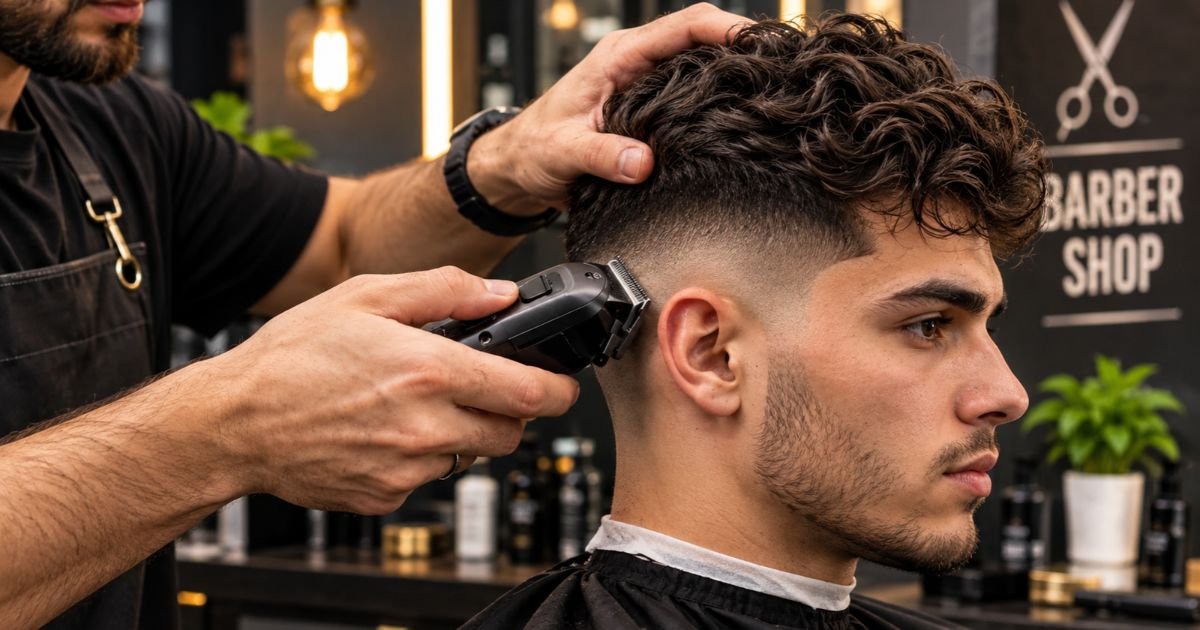
Use these scripts as a starting point. Change the numbers to fit your taste.
Temple fade script “I want a temple fade. Take the temples and sideburns down to skin, with a sharp line. Leave the sides and back longer, and blend the neckline lightly.”
Taper fade script “I want a taper fade. Start the blend at the sideburns, keep a #2 at the top of the fade, and go down to a #1 at the neckline. No harsh lines.”
Mid temp fade script “A mid temp fade, not high. Start the fade at the middle of the temple, shortest guard is a #1, and keep a clean line.”
Mid taper fade script “A mid taper fade. Start halfway up the sides, shortest point is a #1 at the bottom, blended into a #3 up top. Skin only at the neckline.”
Hybrid script “A taper fades with a light shape-up at the temples. Soft blend, but keep the hairline crisp.”
A few extra tips for the chair:
- Say the shortest guard number out loud.
- Say where the fade starts (low, mid, or high).
- Say whether you want a line or a blend.
- Mention if you want skin or no skin at the bottom.
- Ask the barber to show you the result in the mirror before the final trim.
Common mix-ups to avoid:
- Saying “short on the sides” without a guard number
- Asking for a “fade” when you really want a light taper
- Skipping the photo and hoping the barber reads your mind
- Letting the barber lower the hairline without asking first
- Forgetting to say whether you want skin showing at the bottom
If you have a beard, mention it. A taper that blends into the beard looks far better than two separate cuts.
Styles That Work With Each Cut: Smart Pairings
The sides are only half the cut. The top finishes the look. Here are pairings that work well, based on how each cut behaves.
Temple Fade Pairings
Sharp edges love a top with shape and bulk.
- Afro fade: The tight edges around the temples make natural volume look deliberate and neat.
- Curly top fade: Defined curls on top, a clean line at the sides. Strong contrast.
- Blowout haircut: Big, lifted hair above a clean temple area. The two styles go hand in hand.
- Edgar cut: A blunt fringe over tight sides. The temple edge sharpens the whole front.
- Textured crop: A short, messy top with a sharp temple fade at the sides for a modern look.
- Slick back hairstyle: Tight temples plus a smooth, brushed-back top look very polished.
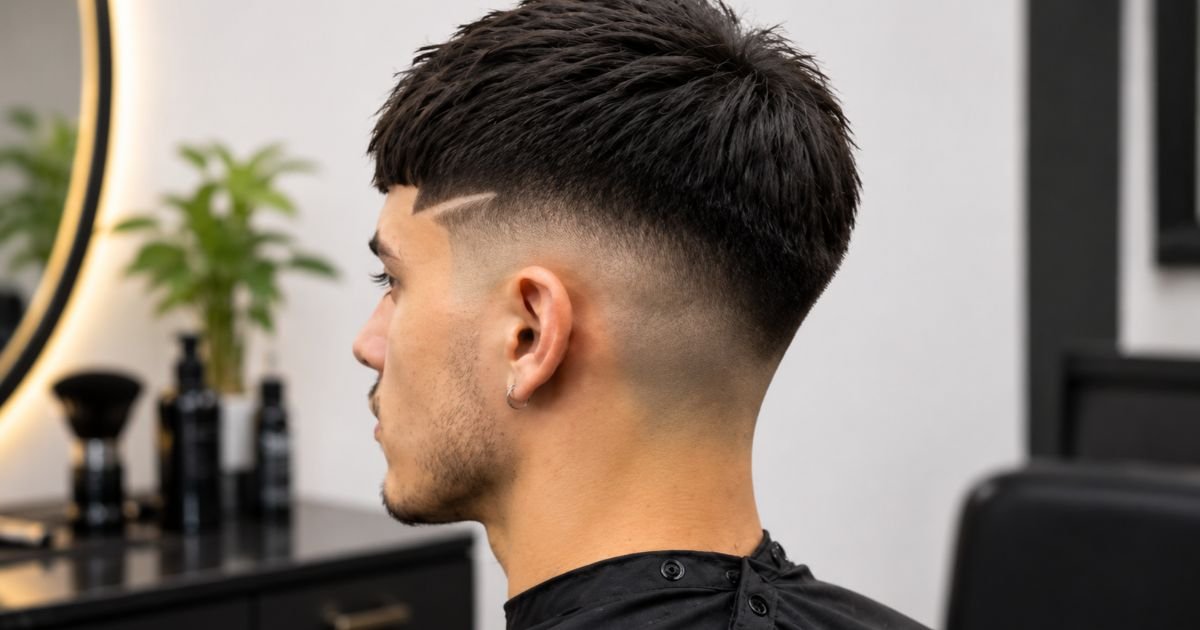
Taper Fade Pairings
The softer taper suits tops with movement and length.
- Side part haircut: A classic match. The soft sides keep the look clean and business-ready.
- Quiff haircut: Taper the sides and lift the front. It looks sharp without trying too hard.
- Middle part hairstyle: Works well with a low or mid taper, and it flatters straight and wavy hair.
- French crop: A short fringe with a blended side. Easy and tidy.
- Textured crop: Works here too, with a softer, more natural feel than the temple version.
- Curly top: A taper keeps the curls in focus without a hard edge around the head.
If you cannot decide on a top, a textured crop is the safest pick. It works with both cuts and suits many face shapes.
Maintenance Compared: The Touch-Up Reality Check
This is the part most guides gloss over. A cut is only as good as the days after the barber.
Temple upkeep. The sharp line needs frequent care. Plan a touch-up about every 2 weeks. Some men stretch it to three weeks, but the line gets soft by then. Between visits, you can do light temple cleanup with a trimmer, though go slow. One slip and the line moves up for good.
Taper upkeep. The blend is forgiving. A visit every 3 to 4 weeks keeps it neat. In between, a bit of styling product on top is usually enough.
Here is a simple schedule:
| Cut | Barber visit | Home care |
| Temple | Every 2 weeks | Light trimming at the temples and edges |
| Taper | Every 3 to 4 weeks | Styling and a neck cleanup if needed |
| Skin version of either | Every 1 to 2 weeks | Moisturize and be gentle with the skin |
How each cut grows out. A fade growing out of the temple style is quick to notice. The line turns fuzzy, and the contrast fades. The taper grows out evenly, so the cut just looks a little fuller.
Cost over a year. Do the math. A haircut every 2 weeks means about 26 visits. Every 4 weeks means about 13. If your barber charges 30 dollars, that is a difference of roughly 390 dollars a year. Frequent barber visits add up, so be honest about your budget.
Between visits, a few simple habits keep either cut looking fresh. Wash and condition normally, since a clean scalp makes the edges look sharper. Use a soft brush on the top to train the direction of growth. Keep a small trimmer for stray hairs on the neckline only, and leave the temples to your barber if you are not confident.
Tips for stretching your results:
- Sleep with a satin cap or pillowcase if you have coily hair
- Moisturize the scalp so the skin around the fade looks healthy
- Avoid picking at the edges, which causes uneven patches
- Book your next visit before you leave the shop
Temple Fade vs Taper Fade for Straight Hair
Straight hair shows everything. Every blend, every line, and every uneven spot is visible. That makes the choice a bit more important.
With the temple style, straight hair shows a very clean contrast. The short hair at the temples is easy to see against the longer top. Regrowth also shows quickly, though, so the line looks tired sooner than it would on curly hair.
With the taper, straight hair gives you the smoothest blend. The gradient looks seamless, and the cut looks polished with almost any top. That includes a side part, a quiff, or a slick back.
What to watch for with straight hair:
- Straight hair often lies flat, so the top may need a bit more length to look full
- Thin straight hair looks better with a soft taper than a harsh high fade
- Thick straight hair can stick out at the sides, so a mid taper helps control the shape
- A skin finish shows regrowth quickly, which means more frequent visits
Our pick: For most men with straight hair, the taper is easier to live with. Choose the temple style if you love the sharp, clean look and will keep the appointments.
Also Read This : Mid Taper Fade Middle Part
Temple Fade Haircut: What You Actually Get
Let us walk through what happens in the chair, so you know what to expect from a temple fade haircut.
- Consultation. You tell the barber the shortest guard number, the height of the fade, and the line you want.
- Clipper work. The barber uses guards to take the temples and sideburns short. Many start with a longer guard and work down.
- Blending. The barber blends the edge so the fade looks even instead of patchy.
- Lineup. A trimmer creates the hairline lineup across the front and around the temples.
- Detailing. The barber checks for symmetry and cleans the neckline. The best cuts have a clean neckline that matches the temples.
- Finish. A small amount of product or oil, and you are done.
A good one has these signs:
- Both temples are perfectly even
- The fade line is crisp but not harsh
- The hairline is not cut too far back
- The top and sides look like they belong together
A poor one has an uneven line, a patchy blend, or a hairline pushed back too far. If a barber takes the line too high, it can take weeks to recover. So speak up early.
If you are new to this cut, start with a mid temp fade. It looks good on most people and leaves room to go sharper next time.
Temple Fade for Black Men

This cut has deep roots in Black barbering culture, and it remains a go-to for natural and coily textures. It is also called the Brooklyn fade in many shops. Why does it work so well?
First, it defines the hairline. Coily hair has a lot of natural volume, and a crisp line gives it a frame. Second, it keeps the bulk where you want it. The top and back stay full while the temples stay clean.
Popular looks for Black men include:
- Afro with sharp temples: Full, shaped hair with sharp edges
- Twists or coils on top: Defined texture with clean temples
- Curly top fade: Soft curls above a skin-tight fade at the sides
- Waves with a taper: A soft taper keeps the wave pattern in focus
Skin care is part of the job here. Short cuts, especially those that reach the skin, can cause razor bumps or ingrown hairs, also known as pseudofolliculitis barbae. This is common on tightly coiled hair, and it is more of a risk when hair is shaved very close.
A few ways to lower the risk:
- Ask for a #0.5 or #1 guard instead of a bare blade if your skin is sensitive
- Request a foil shaver and light pressure for any skin finish
- Cut with the grain when possible
- Apply a soothing, alcohol-free aftershave or moisturizer
- Do not pull the skin tight while shaving, because the hair can retract and grow back under the surface
If bumps are frequent, tell your barber and talk to a dermatologist. Hair and skin care advice is not one-size-fits-all.
A low taper is also a smart choice for many Black men. It is easier to maintain and suits a professional setting. Some men alternate. They wear the temple style on weekends or special events, and a taper fades during the work week.
Frequently Asked Questions
What is the main difference between a temple fade and a taper fade?
A temple fade is a sharp fade focused on the temples and sideburns. A taper fade is a smooth blend that runs down the sides and back.
Is a temp fade the same as a temple fade?
Yes. “Temp” is short for “temple,” and many barbers also call it a Brooklyn fade.
Which is easier to maintain, a temple fade or a taper fade?
The taper fade is easier. It looks good for 3 to 4 weeks, while a temple fade needs a touch-up about every 2 weeks.
What guard number should I ask for in a temple?
Most temple fades finish at skin or a #0 to #1 guard at the temples. Always name the shortest guard to your barber.
What guard number is used for a taper fade?
A taper fade usually ends at a #1 or #2 guard, with a cleaner finish at the neckline.
Is a mid temp fade the same as a mid taper fade?
No. A mid temp fade is a short, local fade with a line at the temples. A mid taper fade starts halfway up the sides and wraps around the head.
Is a taper fade good for a professional look?
Yes. Its soft blend and clean finish make it a safe, professional choice for work and school.
Does a temple fade suit a round face?
Yes. Tight sides make a round face look narrower, and the temple fade does this strongly.
Can I get a temple fade and a taper fade together?
Yes. Ask for a taper fade with a light shape-up at the temples to get a smooth blend and a crisp hairline.
How long does it take for a temple fade to grow out?
The line turns fuzzy within about a week. After 2 to 3 weeks, it looks noticeably overgrown.
Is a skin fade the same as a taper fade?
Not exactly. A skin fade goes down to bare skin, while a classic taper keeps visible hair at its shortest point.
Conclusion
The temple fade vs taper fade debate comes down to one idea. One cut makes a sharp statement in a small area. The other builds a soft gradient around the whole head.
Pick the temple style if you want a defined hairline, high contrast, and you are fine with frequent visits. Pick the taper if you want a clean, low-effort cut that looks good for weeks and works in almost any setting.
When you sit down, name the shortest guard number, say where the fade starts, and choose between a line and a blend. A photo makes that conversation even easier.
Both cuts are great. The best one is the one that fits your face, your hair, and your real schedule. Try one, see how it feels, and adjust at your next visit.
