

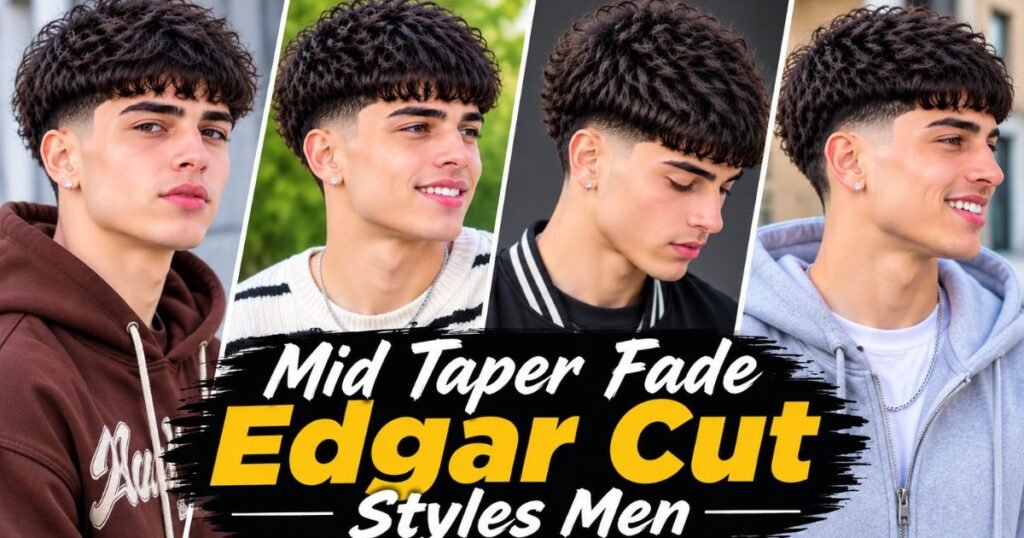
You want a haircut that looks sharp, but you do not want to spend twenty minutes on it every morning. The mid taper fade Edgar cut fits that need well. It pairs a clean, gradual taper on the sides with a straight, blunt fringe across the forehead.
This guide covers ten styles, from the classic version to curly, wavy, and short builds. You will also get exact guard numbers, face shape matches, a hair type breakdown, and a realistic look at upkeep. Take this page to your next barber appointment, and you will leave with the cut you pictured.
Quick answer: A mid taper fade Edgar cut has short, tapered sides that start fading around the middle of the head, plus a straight blunt fringe on top. It works on straight, wavy, and curly hair. Expect a fringe trim every 2 to 3 weeks to keep the line sharp.
Mid Taper Fade Edgar Cut Explained: What Makes It Different
The Edgar haircut for men has two parts that define it. The first is the fringe, which is cut straight across the forehead like a flat line. The second is the sides, which are clipped short and blended so they melt into the top.
The “mid taper fade” tells you where that blend happens. On a mid taper, the fade starts around the middle of the sides, roughly level with the top of the ear. A high fade starts near the temple and shows a lot of skin. A low taper stays near the ear and the neckline and looks softer.
That middle position is why this version is so popular. It gives you contrast without looking extreme. It also suits school, office, and weekend settings.
Taper vs fade: a quick clarification
Barbers use these two words differently. A taper leaves some length at the neckline and around the ears, so the hair gets gradually shorter. A fade usually goes down to the skin or very close to it.
A mid taper fade Edgar cut often combines both ideas. The hair tapers at the very bottom, then fades more tightly as it moves up. That is why you may hear your barber say “taper fade” when they mean one smooth blend.
Where the Edgar cut comes from
The Edgar cut grew out of Mexican-American communities in the southwestern United States. It spread nationally through TikTok and Instagram in the late 2010s. Some people also call it the takuache cut or the “cuh cut.”
The name’s origin is not confirmed. A popular story ties it to baseball player Edgar Martinez, but that link is widely described as a misattribution. It is safer to treat the name as a piece of internet and street culture rather than one clear historical fact.
What it is not
The Edgar often gets mixed up with other cropped cuts. The French crop and the Caesar both use a short fringe, but the Edgar fringe is blunt and flat, while a French crop is usually point cut and textured. You will see the full comparison later in this guide.
10 Best Mid Taper Fade Edgar Cut Styles
Here are eight core styles, plus two hair-specific builds later in the article: a short version and a version for Black hair. Each one lists who it suits, what to ask for, and what to watch out for.
Classic Cuts: The Signature Line
1. Classic Mid Taper Edgar Cut

This is the original look. The fringe sits about one finger width above the eyebrows, cut perfectly straight. The top is short and brushed forward. The sides fade in from the neckline and blend in at the middle of the head.
- Best for: Medium to thick hair, oval and square faces
- Ask for: Mid taper, blunt fringe, forward-combed top
- Watch out for: A crooked fringe line, which ruins the whole cut
If you are new to the style, start here. It is the easiest version to explain, and almost every barber knows how to cut it.
2. Edgar Cut with Straight Hair

Straight hair shows the fringe line better than any other texture. The blunt edge looks crisp, and the top lies flat with almost no effort.
The risk is that thin straight hair can look sparse at the fringe. Ask your barber to leave a little extra density along the front edge. A light blow-dry and a tiny amount of matte paste will keep the top from looking limp.
- Best for: Medium-density hair, round and long faces
- Ask for: Mid taper, slightly longer fringe, minimal thinning
- Watch out for: Cutting the fringe too short, which exposes the forehead
Textured and Wavy Variations
3. Wavy Edgar Cut

Wavy hair gives the cut movement. The fringe still has a straight edge, but the body of the top has a soft, natural bend. This softens the look and makes it feel less rigid.
Your barber should cut the fringe when your hair is dry, or at least stretched flat. Wavy hair springs up after it dries, so a fringe cut wet can end up higher than you planned.
- Best for: Medium to thick wavy hair
- Ask for: Mid taper, dry-cut fringe, keep the natural wave on top
- Watch out for: Product that weighs the waves down
4. Textured Edgar Cut
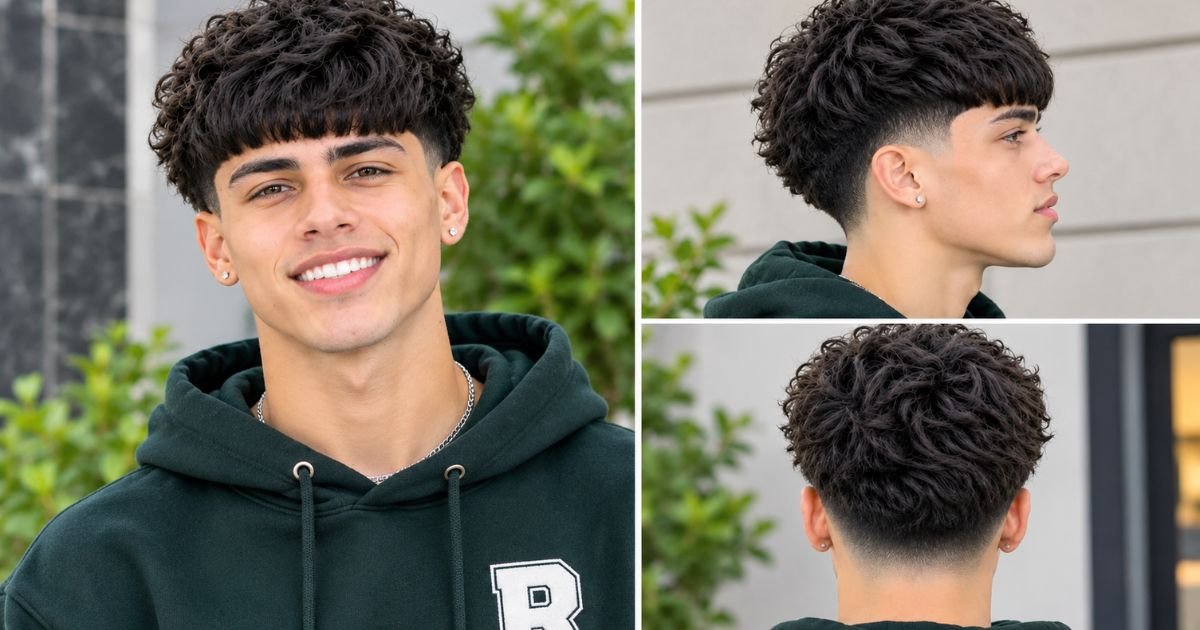
This version uses point cutting or light razor work on the top. The result is a broken, piece-y finish while the fringe line stays straight. It is the modern Edgar hairstyle that most men ask for in 2026.
A matte clay or sea salt spray gives the texture its bite. Skip shiny gels. They flatten the effect and make the fringe look wet.
- Best for: Thick hair, diamond and square faces
- Ask for: Mid taper, textured top, blunt fringe line
- Watch out for: Over-texturizing, which makes the fringe look ragged
5. Curly Edgar Cut

A curly Edgar cut is bold. The curls sit on top, tight and defined, with a sharp mid taper fade underneath. The contrast between soft curls and clean sides is the whole appeal.
The fringe needs special care. Curls shrink as they dry, so a barber may cut the front slightly longer than the final length you want. Ask them to cut curl by curl or to dry-cut the fringe.
- Best for: Natural hair texture with defined curls
- Ask for: Mid taper, curls left at 1.5 to 2.5 inches, fringe shaped with the curl pattern
- Watch out for: Cutting the fringe wet and flat, since it will bounce up later
Detail Work
6. Edgar Cut with Design

Hair art adds a signature touch. Common choices include a thin part line, a lightning bolt, a small geometric shape, or a line cut into the taper itself.
Keep the design simple. Complex patterns grow out fast and look messy within a week. A single clean line is easier to refresh and cheaper to maintain.
- Best for: Men who want a personal detail
- Ask for: A razor line or small shape, placed in the fade area
- Watch out for: Designs that cross into the fringe, which can break the straight line
7. Edgar Cut with Beard Connect
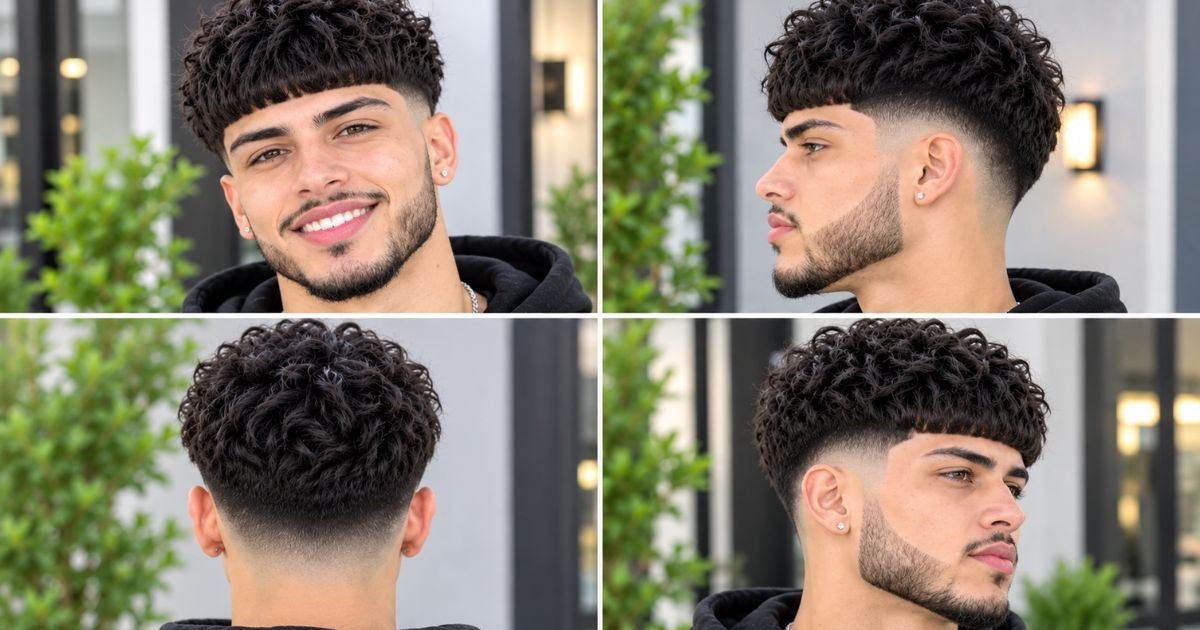
A beard adds balance, especially for men with round or soft jawlines. The key is the connection. The mid taper on the sides should flow into the sideburn, then into the beard without a hard stop.
Ask your barber to match the beard fade with the haircut fade. When both fades share the same blend point, the whole look feels planned.
- Best for: Men with medium to full beards
- Ask for: Mid taper that connects to the sideburn and beard
- Watch out for: A beard that is much longer than the sides, which looks disconnected
Low-Maintenance Version
8. Short Fringe Edgar Cut
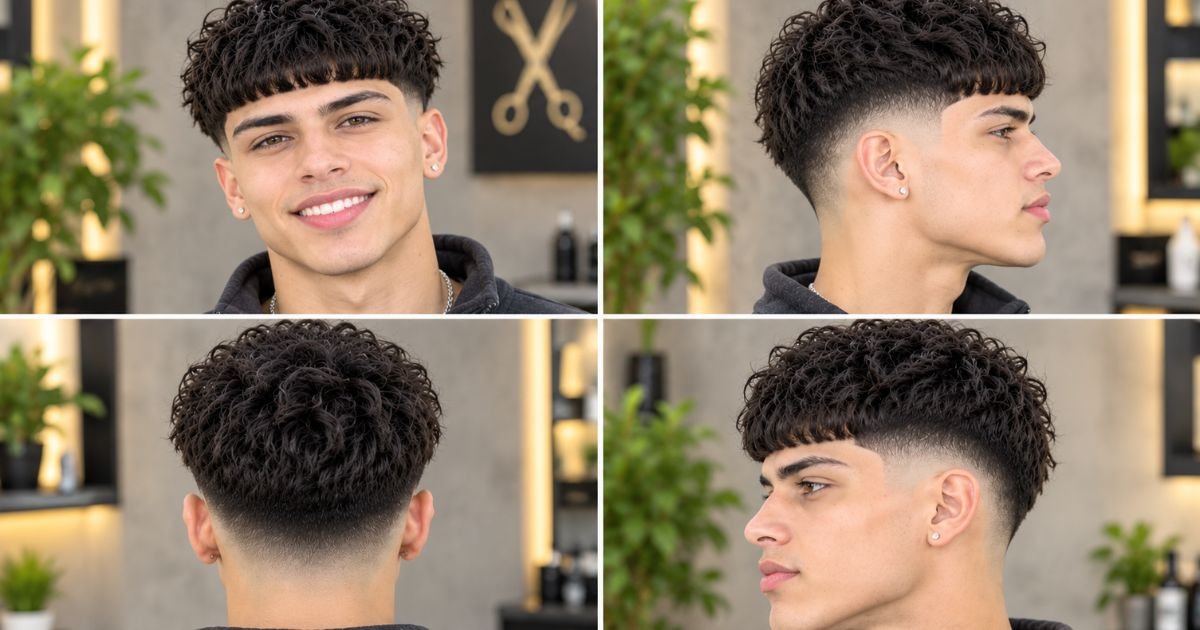
This is the easiest style on the list to live with. The fringe is cut shorter, closer to the hairline, so it needs less styling and shows less regrowth.
It works well for men who want a clean look but hate daily routines. You can wash it, shake it, and go.
- Best for: Busy men, students, athletes
- Ask for: Mid taper, short blunt fringe, top at about 1 inch
- Watch out for: A fringe so short that it reads as a buzz cut
Why the Edgar Cut Took Over in 2026
Three things pushed the Edgar cut into the mainstream.
First, social media made it easy to see. Short videos show the fade and the fringe from every angle, and that makes it simple to copy. Second, the cut is flexible. It works on most hair types, and barbers can adjust the fade height, the top length, and the texture. Third, men want structured haircuts again. After years of long, messy, and slicked-back looks, a clean line feels fresh.
Some 2026 trend roundups also describe the Edgar as spreading beyond its original communities into Europe and other markets. It now sits next to textured crops and modern Caesar cuts as one of the standard short styles in barbershops.
The mid taper version took the lead because it is the safest middle ground. A high fade can feel too bold for work. A low taper can feel too soft for Edgar’s sharp fringe. The middle option works in both worlds.
Also Read This : Mid Taper Fade Long Hair
Pros and Cons: What You’re Signing Up For
Every haircut has trade-offs. Here is the honest list.
Pros
- Looks clean and intentional with little styling
- Works on straight, wavy, and curly hair
- Easy to describe to a barber
- Cool in hot weather because the sides are short
- Gives a good shape to many face types
- Easy to dress up or down
Cons
- The fringe line shows every mistake
- Needs a trim every 2 to 3 weeks to stay sharp
- Hairline problems are easy to spot, especially a receding hairline or a strong cowlick
- Not every barber has practice with blunt fringes
- Very thin hair can look flat at the front
If you can live with the cons, the cut pays you back every morning.
Choosing by Hair Type: Where the Fringe Line Holds Best
Your hair texture decides how easy the Edgar is to wear. Here is how each type behaves.
Straight Hair
Straight hair holds the fringe line best. The edge stays sharp from day one to day twelve. Because straight hair has little bounce, the length you see in the mirror is the length you keep.
Ask for a bit of texture on top so the cut does not look like a helmet. Use a light matte product and a quick blow-dry to add lift at the front.
Wavy Hair
Wavy hair needs a slightly longer fringe than you want. As it dries, the waves pull up. A fringe that looks perfectly wet can end up half an inch higher once dry.
Let your barber see your hair dry before the final trim. That one step avoids most wavy-hair mishaps.
Curly Hair
Curly hair gives the most dramatic result, and it also takes the most planning. Curl tightness varies a lot, so shrinkage can be big. A curl that measures two inches stretched may sit at one inch when dry.
Moisture matters here. Dry curls frizz, and frizz breaks the clean fringe line. Use a leave-in conditioner or curl cream, and let the curls dry without heavy brushing.
Thick hair and medium-density hair
Thick hair holds the shape but can puff out at the front. Ask for light thinning inside the top, not at the fringe edge. Medium-density hair is the easiest to cut, because it holds the line without much help. Fine, low-density hair needs a slightly longer top to hide the scalp.
Face Shape Matchups
The Edgar fringe draws a horizontal line across the forehead. That line changes how your face looks. Use these matches as a guide, then adjust with your barber.
Oval Face
Oval faces are balanced, so almost any version works. The classic mid taper Edgar cut is a safe pick. Try a textured top if you want more energy.
Round Face
A round face needs height and angles. Go with a slightly longer top, a textured finish, and a fringe that is not too thick. Keep the fade a bit tighter on the sides to add length to the face shape.
Square Face
Square faces already have strong angles. A mid taper keeps the jawline in the spotlight. A textured top softens the look a little, and a short blunt fringe highlights the forehead and brow.
Heart-Shaped Face
Heart-shaped faces are wider at the forehead and narrower at the chin. A very short fringe can make the forehead look larger. Choose a fringe that falls a little lower, and add a short beard if you can grow one to balance the jaw.
Long Face
Long faces can look longer with too much height on top. Keep the top flat and the fringe slightly thick. The blunt line across the forehead shortens the face visually.
Diamond Face
Diamond faces are wide at the cheekbones. A textured Edgar with a medium fringe gives the forehead more presence. Avoid very tight sides, which can make the cheekbones look sharper.
Rectangular Face
Rectangular faces are long with a square jaw. A flat top and a heavier fringe help. A mid taper keeps the sides from adding extra width, and a light beard can round out the lower face.
Age Group Breakdown
Teenagers
Teens often want the sharpest version: a clear fringe, a strong fade, and sometimes a design. A mid taper is a smart base. It looks sharp, but it is easier to explain to parents and teachers than a skin fade.
Keep the top slightly longer so you can change the style as your taste shifts.
Young Men
For men in their twenties and early thirties, this is the most flexible stage. Try the textured Edgar cut, the curly version, or a beard connection. You can test styles without worrying about workplace rules.
Professional Men
At work, restraint helps. Choose a slightly longer fringe, a softer taper, and a matte finish. A short fringe Edgar cut or a classic version with a neat side taper looks polished with a shirt and jacket.
Skip hair designs and strong disconnections if your office is formal. A clean mid taper haircut with a blunt fringe is usually well accepted.
Talking to Your Barber: The Exact Guard Numbers
Most people lose their hair at the barber chair, not in the mirror. They say “Edgar cut” and hope for the best. Give clear numbers, and you remove the guesswork.
Guard numbers vary by clipper brand, so treat these as a starting point. Your barber can adjust them by eye.
| Area | Guard / length | Notes |
| Neckline and lowest taper | Guard 1 (3 mm) or skin | Use skin only if you want more contrast |
| Lower sides | Guard 1 to Guard 2 | The start of the fade |
| Mid sides, blend zone | Guard 2 to Guard 3 | Where the mid taper blends in |
| Upper sides near the top | Guard 3 to Guard 4 | Connects smoothly with the top |
| Top | 1 to 2.5 inches | Scissor cut, length depends on hair type |
| Fringe | 1 to 1.5 inches below the hairline | Cut straight with scissors |
What to say, word for word
Try this script:
“I want a mid taper fade Edgar cut. Start the taper around the middle of the sides, go from a guard 1 up to a guard 3 or 4, and blend it into the top. Keep the top about an inch and a half, and cut the fringe straight across, just above my eyebrows.”
Bring a reference photo
A haircut reference photo is the best tool you have. Choose one with your hair type. A photo of a curly Edgar will not help if you have straight hair. Also pick two angles: front for the fringe, side for the taper.
Three questions to ask during the barber consultation
- How will you cut the fringe line, with scissors or with clippers?
- Can you dry-cut it so I can see the real length?
- How often should I come back to keep it sharp?
A good barber will answer all three without hesitation.
Video Guide: Watch the Fringe Get Cut
A short video helps you see what words cannot. Embed or link a barber tutorial near this section on your site, and ask readers to watch for four things:
- The fade start point. Look for the moment the barber changes guards, and see how the blend line rises to the middle of the head.
- Straight-line cutting. Notice how the barber holds the scissors flat across the fringe, rather than cutting at an angle.
- The dry check. A skilled barber stops to check the length with dry hair, especially on wavy and curly types.
- The clean-up. Watch the final detailing around the temples and neckline with a trimmer.
If you search for a tutorial, look for a licensed barber showing real hair, not a quick edit with no explanation.
Common Mistakes That Ruin an Edgar Cut
Even a good idea can go wrong. These errors come up again and again.
- Cutting the fringe too high. A fringe that sits near the hairline looks like a mistake, not a style. Keep it just above the eyebrows.
- Cutting it too low. The reverse problem makes the cut look like a bowl.
- Skipping the dry check. Wavy and curly hair needs a final look when dry.
- Choosing the wrong fade height for your head shape. A very high fade can make a narrow head look even narrower.
- Using too much product. Heavy gel makes the fringe look greasy and flat.
- Letting the fringe grow out. After three weeks, the straight line loses its shape.
- Ignoring the hairline. A receding hairline or a strong cowlick changes how the fringe sits. Tell your barber before they start.
- Not asking for the neckline. A rough neckline makes the whole fade look unfinished.
Maintenance Reality Check
The Edgar cut looks easy. It is easy, but only if you stay on top of it.
Fringe Trim Frequency
The fringe is the first part to lose its shape. Plan a visit every 2 to 3 weeks for a perfect line. If you can live with a softer look, 4 weeks is fine.
Between visits, you can clean up the hairline and sideburns with a trimmer. Do not trim the fringe yourself unless you have done it before. One wrong pass is hard to fix.
Daily Styling
A good routine takes under three minutes.
- Start with towel-dried hair.
- Blow-dry the fringe forward with a low heat setting.
- Take a pea-sized amount of matte hair product.
- Rub it between your palms, then work it through the top.
- Brush or comb the fringe straight across.
A matte clay or paste gives you hold without shine. Pomade can work, but a high-shine finish is not the usual Edgar look.
Washing Routine
Wash three to four times a week for most hair types. Daily washing can dry out curly and wavy hair. Straight hair and oily scalps may need it more often.
Use a gentle shampoo, and add conditioner to the lengths on top. Curly hair benefits from a leave-in conditioner after washing.
Mid Taper Edgar Cut vs Other Styles
Men often ask how Edgar compares to other short styles. Here is a quick table, followed by details.
| Feature | Edgar cut | French crop | Standard fringe |
| Fringe edge | Blunt and straight | Point cut and textured | Soft or angled |
| Sides | Faded or tapered | Faded or tapered | Often longer, less fade |
| Top length | Short to medium | Short to medium | Medium to long |
| Styling effort | Low | Low to medium | Medium |
| Overall feel | Sharp and graphic | Relaxed and textured | Casual and flowing |
Edgar Cut vs French Crop
Both cuts have short sides and a forward fringe. The difference is in the finish. The Edgar fringe is cut flat, like a ruler line. The French crop fringe is broken up, so it looks softer and messier.
Choose the Edgar if you like clean geometry. Choose the French crop if you prefer a relaxed look.
Edgar Cut vs Standard Fringe
A standard fringe haircut is usually longer and more flexible. You can sweep it to the side or push it back. The Edgar has a fixed, straight look, and the sides are cut much shorter.
If you want options in how you style your hair each day, the standard fringe gives you more choices. If you want a defined shape, the Edgar is stronger.
Best Mid Taper Fade Edgar Cut Styles for Men Short

Style 9 of 10 is the short mid taper Edgar crop. The top is held at about three quarters of an inch to one inch, and the fringe sits close to the hairline. It is one of the best low-maintenance Edgar haircut options.
This is a smart pick for men with thin or fast-growing hair, because the short length hides gaps and grows out cleanly. It also suits hot climates, gym routines, and fast mornings.
How to ask for it: “Mid taper, guard 2 to guard 4 on the sides, top at one inch, short blunt fringe.” Add a trim every two weeks, since short cuts show regrowth faster.
Best Mid Taper Fade Edgar Cut Styles for Men Straight
For straight hair, nothing beats the classic style from earlier (#2). The fringe line is clean, and the top sits flat. This is the version that looks the most like the original Edgar.
Three tips make it better:
- Ask for a slight texture on top, so the hair does not look like a flat plate.
- Use a matte paste for hold, not a heavy wax.
- If your hair is fine, ask for the fringe a half inch longer than you think you need.
Straight-haired men also get the best results from a well-executed beard connection, since straight hair fades smoothly into stubble.
Best Mid Taper Fade Edgar Cut Styles for Men Black

Style 10 is the mid taper Edgar cut for Black hair, often cut with a defined line-up and a sharp temple edge. Tight coils hold the blunt fringe shape very well, and the contrast between the dense top and the faded sides looks striking.
A few details matter here:
- Line-up: A crisp edge-up at the forehead, temples, and sideburns frames the fringe.
- Top: Keep the coils at one to two inches. Brush them forward for a flat, even surface, or leave them natural for a fuller look.
- Moisture: Dry hair breaks. Use a light oil or moisturizer on the top, and protect your hair with a satin cap or pillowcase at night.
- Fade work: Ask a barber with experience in textured hair, since tight curls need a different clipper technique than straight hair.
For men who want extra detail, a part line or a small design in the taper looks excellent on this texture.
Frequently Asked Questions
What is a mid taper fade Edgar cut?
It is a haircut with short sides that fade starting at the middle of the head and a straight, blunt fringe on top. The result is a clean, sharp look with moderate contrast.
How long should the fringe be on an Edgar cut?
The fringe usually sits just above the eyebrows, about 1 to 1.5 inches below the hairline. Shorter looks cleaner, and longer looks bolder.
What guard numbers should I ask for?
Start with a guard 1 at the bottom, then blend up through guard 2 and guard 3, and finish near guard 4. Your barber can adjust to your head shape.
Does a mid taper fade Edgar cut work on curly hair?
Yes. Ask your barber to dry-cut the fringe and leave extra length for shrinkage. Curl cream keeps the shape smooth.
How often do I need a trim?
Every 2 to 3 weeks keeps the fringe line sharp. Every 4 weeks works if you accept a softer edge.
Is the Edgar cut good for professional settings?
Yes, in a clean version. Choose a softer taper, a matte finish, and no designs.
Which face shape suits the Edgar cut best?
Oval, square, round, and diamond faces all work with the right adjustments. Long and heart-shaped faces need a fringe length that suits their proportions.
Can I get an Edgar cut with thin hair?
Yes. Keep the top slightly longer, and ask for minimal thinning. A short crop version hides thin areas well.
What is the difference between an Edgar cut and a French crop?
The Edgar fringe is blunt and flat. The French crop fringe is textured and point cut.
What products should I use?
Use a matte clay, paste, or sea salt spray. Avoid heavy gels and shiny pomades.
Is the Edgar cut high maintenance?
It is low in daily styling, but needs regular barber visits. A short fringe version needs the least work.
Can I wear it with a beard?
Yes. Ask your barber to blend the taper into the sideburn and beard so the lines flow together.
Conclusion
The mid taper fade Edgar cut stays popular because it solves a real problem. It looks sharp, takes little time to style, and adapts to many hair types and faces. The key is the details: a straight fringe, a smooth blend, and the right guard numbers.
Pick the style that fits your hair first. Straight hair suits the classic cut, wavy hair loves a textured version, and curly or coily hair can carry the bold, high-contrast look. Then match the fringe length to your face shape and your daily routine.
Before your next visit, save a clear reference photo, write down your guard numbers, and ask the barber to check the fringe on dry hair. Do that, and you will walk out with a clean cut that holds its shape for weeks.
