

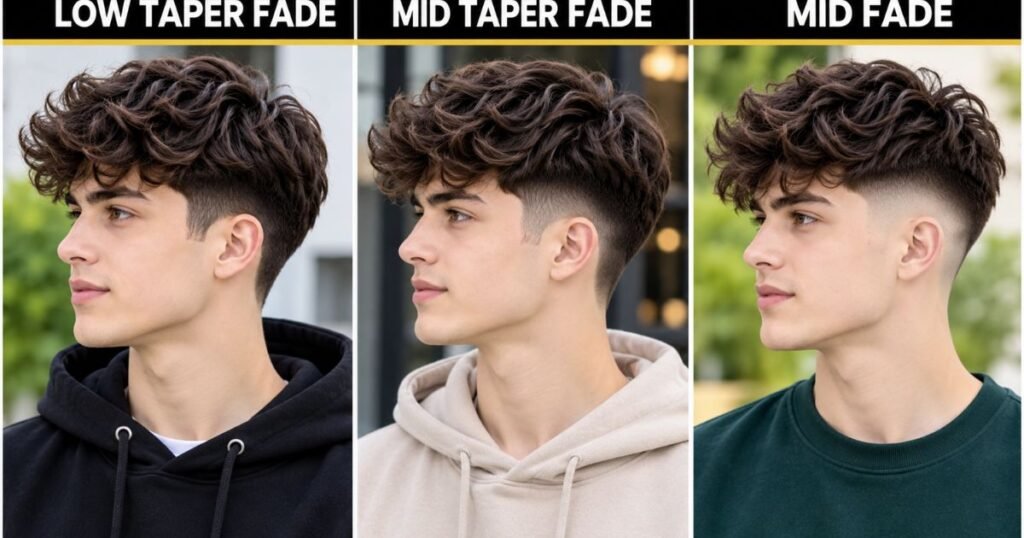
You sit in the barber chair. The barber asks, “What are we doing today?” You say “a fade,” and then comes the follow-up that freezes most people. Low, mid or high? Taper or fade?
Here is the short version. A low taper fade is subtle and starts near the ear and neckline. A mid taper fade sits at the middle of the sides and gives a softer blend with more shape. A mid fade is the boldest of the three, with a higher contrast and a lot more skin showing.
This guide breaks down all three cuts in plain words. You will learn how each one looks, how long it lasts, which hair types and face shapes suit it, and exactly what to tell your barber.
Quick Answer: Which Cut Should You Pick?
- Pick a low taper fade if you want a clean, subtle cut for a conservative workplace or daily wear.
- Pick a mid taper fade if you want a balanced look that is neat but still has some edge.
- Pick a mid fade if you want sharp contrast, a modern look, and you do not mind regular barber visits.
If you are still unsure, start with the mid taper. It is the safest middle ground, and you can always go higher or lower next time.
What Is a Low Taper Fade?

A low taper fade is a haircut where the hair on the sides and back shortens gradually, starting low around the ears and the neckline. Most of the side hair stays longer. Only the edges get the tight, close cut.
The blend usually begins about one inch above the ear. It follows the natural hairline around the sideburns and the nape of the neck. Because the change in length happens in such a small area, the result looks soft and tidy rather than dramatic.
Barbers often describe it as the “quiet” option. It frames the face without announcing itself.
Key features:
- The blend starts low, near the ears and neckline.
- The skin-close section is small, and the skin exposure is minimal.
- The contrast between top and sides is gentle.
- It grows out slowly and stays presentable longer.
Many guys choose it as a first taper because the risk is low. It works with a side part, a textured crop, a pompadour or natural curls.
What Is a Mid Taper Fade?
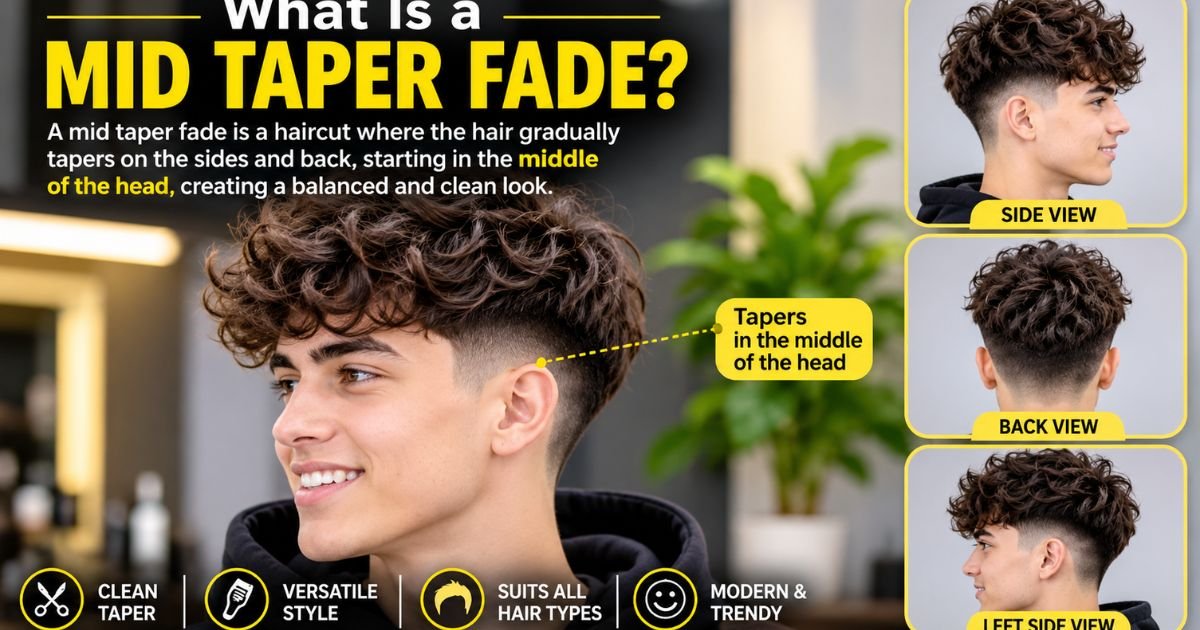
A mid taper fade starts the blend around the middle of the sides, roughly level with the top of the ear or a bit above. Below that point, the hair tapers down smoothly toward the sideburns and the neckline.
It sits between the low and high versions. You get more shape than a low cut, but you avoid the loud look of a high fade. That is why so many barbers treat it as the default recommendation.
The word “taper” matters here. A taper shortens the hair gradually and usually leaves some length at the bottom. A true skin fade drops to bare skin. The taper version keeps things softer, so the sides look neat but not shaved.
Key features:
- The blend starts at the middle of the sides.
- The hair at the bottom is very short but often not fully bald.
- It adds definition to the head shape.
- It looks professional but still current.
If you have short to medium hair on top, this cut is often the sweet spot. It gives a clear shape without the upkeep of a bald fade.
What Is a Mid Fade?
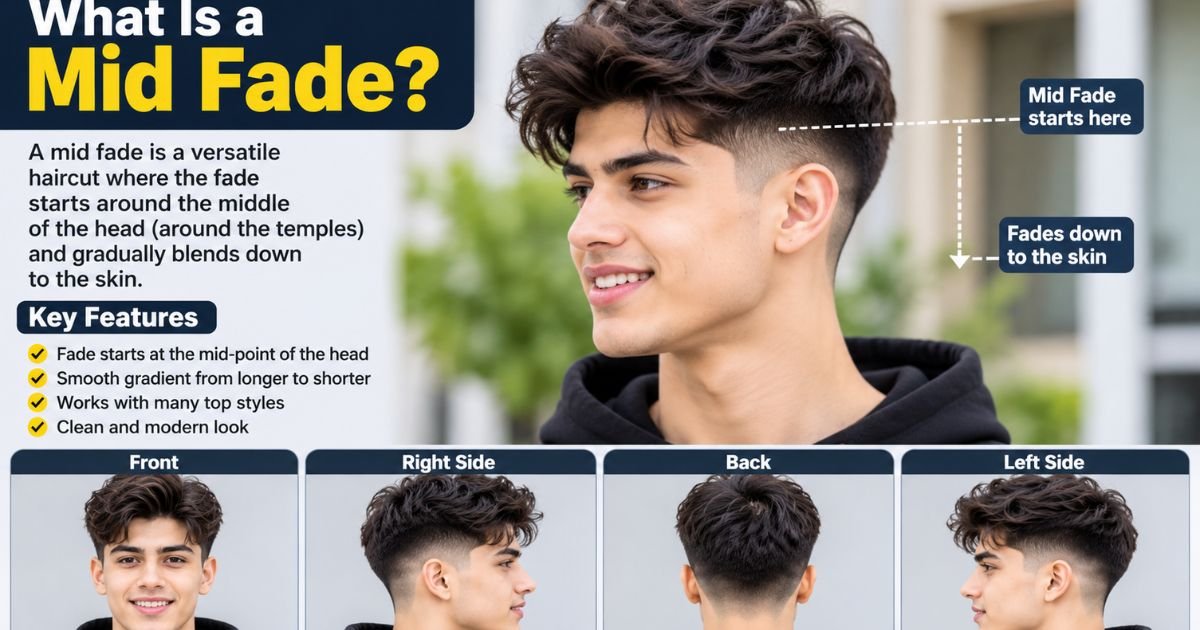
A mid fade starts at the same middle point as the taper, but it does something different at the bottom. The hair fades down to the skin, or to a very tight guard such as a Guard 1 or a razor finish. That is why people also call it a mid skin fade.
The change from long to short happens faster and more clearly. You see a clean gradient from the top down to bare skin.
This makes this cut look sharper and more modern. It also makes it more obvious when it starts to grow out.
Key features:
- The blend starts at the middle of the sides.
- The bottom section reaches skin or very close to it.
- The contrast is high and the look is crisp.
- It needs more frequent touch-ups.
Think of it this way. A taper turns the volume down gently. A skin fade turns it up and makes a statement.
Why This Comparison Matters in 2026
Barber terms have never been consistent. One shop calls a cut a “mid taper.” Another calls the same thing a “mid skin fade.” Clients leave with a haircut they did not expect, and the barber feels blamed.
In 2026, the trend leans toward natural, textured tops and softer blends. Many barbers say clients now ask for cuts that look sharp at the office and still fit a weekend. That puts the low, mid and skin versions at the center of most conversations.
Understanding the difference helps in three ways:
- You get what you want. Clear words mean fewer surprises.
- You save money. A cut that fits your routine needs fewer touch-ups.
- You look better. The right height flatters your face shape and hair texture.
Search results also mix up these terms. Some pages treat “taper” and “fade” as the same thing. They are not. A fade can drop to skin. A taper is a gradual shortening that often keeps some hair. The three cuts in this guide sit on that line.
Quick Comparison Table
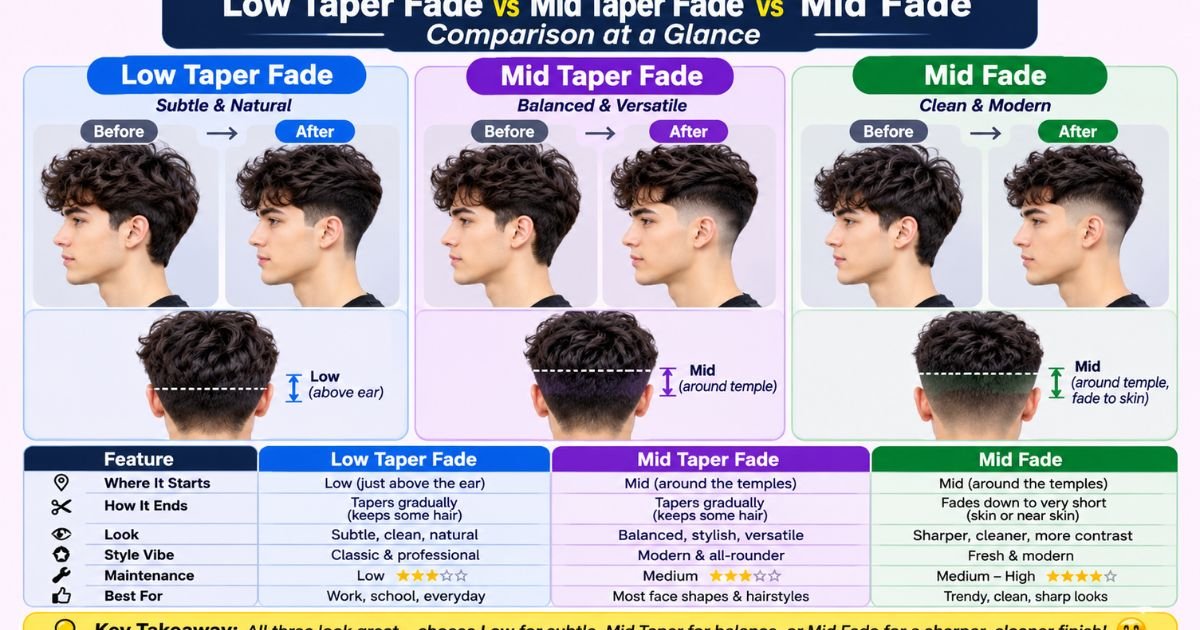
| Feature | Low Taper Fade | Mid Taper Fade | Mid Fade |
| Blend starts | Near ears and neckline | Middle of the sides | Middle of the sides |
| Bottom length | Short, often not bald | Short, often not bald | Skin or very close to skin |
| Contrast | Low | Medium | High |
| Skin exposure | Minimal | Moderate | High |
| Look | Soft, classic | Balanced, versatile | Sharp, modern |
| Touch-up time | About 3 to 4 weeks | About 2 to 3 weeks | About 2 to 3 weeks |
| Best for | Conservative workplace | Everyday hairstyle | Bold, clean style |
| Grow-out | Slow and gentle | Moderate | Fast and obvious |
Touch-up times are general barber guidance. Hair growth speed, hair density and how sharp you like your lines will change them.
Low Taper Fade vs Mid Taper Fade
This is the most common comparison, and it comes down to one thing: height.
The low version begins its blend low on the head. The mid version begins higher. Everything else follows from that choice.
Visual impact. The low version looks subtle. It leaves more hair on the sides, so the head looks softer. The mid version removes more hair, so the head looks slimmer and more defined.
Face effect. A low taper adds a little width to the sides. That helps narrow or long faces look more balanced. A mid taper trims the sides more, which adds a sense of height. That helps rounder faces look less wide.
Maintenance. The low cut grows out more quietly. The mid cut shows regrowth sooner because the contrast is stronger.
Setting. Both are workplace friendly. The low taper is the safer pick for a strict dress code. The mid taper suits creative jobs and casual offices.
Choose the low version if:
- You want a natural hairline and a soft finish.
- You visit the barber every month or so.
- You work in a formal environment.
Choose the mid version if:
- You want a clearer shape without going full skin fade.
- You like a tidy but modern look.
- You are happy to book a visit every two to three weeks.
Mid Taper Fade vs Mid Fade
These two start at the same height, so people mix them up. The difference is how far the hair drops at the bottom.
The taper keeps a short layer of hair near the sideburns and neckline. The blend is smooth and soft. The fade runs all the way down to skin, so the contrast is higher.
Look and feel. The taper reads as classic and gentle. The fade reads as sharp and clean. If you imagine a photo, the fade will show a clear line of bare skin near the base. The taper will not.
Maintenance. Bare skin shows new growth fast. After about ten to fourteen days, the fade starts to lose its crisp edge. A taper hides that regrowth better.
Comfort. Some people find the skin-close section sensitive, especially right after a cut. A taper is gentler on the neck and ears.
Workplace. The fade is fine in most offices today, but the taper is the safer option where hair rules are strict.
Quick rule: If you want soft and easy, go taper. If you want sharp and bold, go fade.
Low Taper Fade vs Mid Fade
This comparison has two differences stacked together. The start height is different, and the amount of skin is different.
The low taper starts low and stays soft. The mid cut starts higher and goes to skin. So the gap in style is big.
| Question | Low Taper | Mid Skin Fade |
| Which is subtler? | Low taper | Mid skin fade is bolder |
| Which lasts longer? | Low taper | Mid skin fade needs earlier touch-ups |
| Which shows more scalp? | Less | More |
| Which suits a formal office? | Low taper | Works in most, not all |
| Which looks sharper in photos? | Softer look | Crisper look |
If you want something you can forget about for a few weeks, choose the low taper. If you want that fresh-from-the-barber look and you enjoy the routine, the mid skin fade is worth the effort.
One more point. A mid skin fade can make a head shape look more defined, but it also highlights flaws such as scars, uneven skin tone or a bumpy skull. A low taper is more forgiving.
How to Choose Based on Hair Type
Your hair texture and hair density change how each cut looks. Here is how to think about it.
Straight Hair
Straight hair shows every line. That means a blend looks very clean, but a mistake also stands out.
- Low taper: A great pick. The soft edge works well with a side part or a classic cut.
- Mid taper: Good for a short crop or a quiff. It adds structure.
- Mid skin fade: Looks crisp, but straight hair can look flat on top if you keep it too short. Leave some length for texture.
Fine, straight hair can look thin when the sides are very short. If your hair is fine, a low or mid taper usually looks fuller than a skin fade.
Curly Hair
Curly hair is a strong match for tapers and fades. The tight sides give your curls room to stand out.
- Low taper: Keeps the natural hairline and lets curls look soft.
- Mid taper: Defines the shape without removing too much side length.
- Mid skin fade: The contrast makes curls pop, especially with a defined top.
Ask for a longer top so the curl pattern can show. If curls are cut too short, they can look like a flat cap. Your barber should also cut curly hair when it is dry or lightly damp so they can see the true length.
Thick Hair
Thick hair can feel heavy and boxy on the sides. A fade removes bulk fast.
- Low taper: Leaves more weight on the sides, so very thick hair may still feel puffy.
- Mid taper: Removes enough bulk to keep things neat. It is often the best answer for thick hair.
- Mid skin fade: Removes the most volume and keeps the head looking clean.
If your hair density is high, you may also need a texture cut on top so it does not look like a helmet.
How to Choose Based on Face Shape
There are no strict rules here. A skilled barber can adjust any cut. Still, face shape gives you a helpful starting point.
Round or Square Face
For a round face, you want to add height and trim width. A mid taper or a mid skin fade removes bulk from the sides and draws the eye upward. Pair it with some volume on top.
For a square face, the strong jawline already gives structure. A low taper softens the corners. A mid taper adds balance without making the face look harsher.
Long or Oval Face
A long face can look longer if you remove too much from the sides. A low taper keeps width at the temples and helps balance the length. Keep the top shorter or textured rather than very tall.
An oval face is the easiest to fit. Almost any of the three cuts will work. Choose based on your lifestyle and hair type instead.
Heart or Diamond Face
A heart face is wider at the forehead and narrower at the chin. A low taper keeps the sides fuller and adds balance near the lower face. A beard can help too.
A diamond face has wide cheekbones and a narrower forehead and chin. A mid taper keeps things neat around the cheeks. Avoid cutting the sides too short, since that can make the cheekbones look even wider.
How to Ask Your Barber
Clear words and a reference photo solve most problems. Here is a simple method.
- Bring a reference photo. Pick one that shows the side and the back, not only the front.
- Name the starting height. Say low, mid or high.
- Say taper or fade. Say “taper” if you want some length left at the bottom. Say “skin fade” if you want bare skin.
- Give guard numbers. Guard 1 is about 3 mm, Guard 2 is about 6 mm, Guard 3 is about 10 mm and Guard 4 is about 13 mm.
- Describe the top. Give the hair length on top, in inches or with a finger gesture.
- Mention the neckline. Say whether you want it blocked, rounded or tapered.
- Mention sideburns. Tell the barber if you want them short, medium or left natural.
Sample scripts you can use:
- “I’d like a low taper fade, starting just above the ear, with a Guard 2 at the bottom. Keep the top about three inches.”
- “Give me a mid taper fade with a natural neckline. I want it soft, not bald.”
- “I want a mid fade down to skin, with a clean line-up and two inches on top.”
If you are not sure, ask the barber to start higher or longer. It is easy to take more off. It is impossible to put it back.
Video Guide
A short video helps a lot because you can see the blend height and how the clippers move.
This video shows low, mid and high fades side by side. Notice where each blend starts and how much skin shows at the bottom.
Video credit: Danito Bless Hands on YouTube.
What to watch for in a good video:
- Where the barber starts the blend on the side of the head.
- Which guard numbers the barber uses.
- How the barber softens the line around the ear.
- How the finish differs between a taper and a skin fade.
Pause at the side view and compare it with your own reference photo. That small step prevents most miscommunication.
Common Mistakes to Avoid
Most bad fades come from small errors, not bad hair. Watch out for these.
- Saying “fade” and expecting a taper. A fade can go to skin. If you want soft, say taper.
- Skipping the reference photo. Words like “short” or “clean” mean different things to different people.
- Choosing a height that clashes with your face shape. A very high blend on a long face can look stretched.
- Ignoring your natural hairline. A fade that fights a receding or uneven hairline looks harsh. Work with it.
- Forgetting about hair growth. If you hate frequent barber visits, a skin fade will annoy you.
- Cutting the top too short. The top needs enough length to show contrast and texture.
- Not mentioning the neckline. A blocked neckline looks very different from a tapered one.
- Booking the wrong barber. Pick someone who knows your hair texture. This matters a lot for coily hair.
How to Maintain Each Style
Good haircut maintenance keeps the blend clean and extends the time between visits.
Low Taper Fade
This cut is the easiest to keep. Book a touch-up every three to four weeks. Between visits, tidy the neckline and sideburns at home with a small trimmer only if you are comfortable doing so. Otherwise, leave it to the barber.
Because the blend is soft, regular trims on top matter more than the sides.
Mid Taper Fade
This cut looks best with a visit every two to three weeks. The contrast between the top and sides is clearer, so regrowth shows sooner. Ask for a quick clean-up if you only need the edges refreshed. Many barbers charge less for that.
Mid Fade
This cut needs the most attention. Plan on a visit every two weeks if you love the crisp look. Bare skin shows new hair quickly, and the line starts to blur. Moisturize the skin-close section to avoid dryness and irritation.
Heat and Product
Your styling routine matters as much as the cut.
- Blow-drying: Use medium heat and a vent brush to lift the top. Finish with a cool shot to set the shape.
- Heat styling: Keep irons and hot tools to a minimum. Too much heat dries hair and weakens the blend.
- Styling products: Use matte clay or paste for texture, pomade for a polished finish, and sea salt spray for grip on fine hair.
- For curly or coily hair: Use a leave-in conditioner or curl cream. Moisture keeps the top defined and healthy.
- Wash routine: Use a gentle shampoo two to three times a week. Overwashing can strip natural oils.
Always apply the product to the top only. Product on the faded sides makes them look messy.
Low Taper Fade vs Mid Taper Fade for Black Men
Both cuts are popular among Black men. They also work across a wide range of hair textures, from 4C coils to looser curls, waves, twists and locs.
Here is how they differ for this audience.
Low taper. It keeps a natural hairline and gives a clean, classic finish. It pairs well with a short afro, a twist sponge top or waves. It is a strong choice for a professional setting.
Mid taper. It adds more shape and highlights the top. It works well with a high-top, a sponge twist, a short natural or a wave pattern. Many barbers see it as the most flexible option.
Line-up or edge-up. A sharp line-up around the forehead and temples can sit well with either cut. It is a technique, not a haircut. Ask your barber for a natural line-up if you want to keep your hairline.
Care tips:
- Moisturize the top often, since coily hair dries fast.
- Sleep with a satin bonnet or on a satin pillowcase.
- Brush waves or use a soft brush to keep the pattern flowing.
- Use a non-greasy styling product so the skin around the fade stays clean.
- Find a barber with proven experience on your hair texture.
Choose the low version for subtle and polished. Choose the mid version for shape and definition. If you want maximum contrast, a mid skin fade is the bolder step.
Also Read This: Mid Taper Fade Curly Hair
Mid Taper vs Mid Taper Fade
These two terms confuse a lot of people. In most barbershops, they mean almost the same thing.
A mid taper is a gradual shortening of hair starting at the middle of the sides. The fade version does the same thing, with a smoother blend and a slightly tighter finish at the bottom. Some barbers use the extra word “fade” to signal that the clippers will go a bit shorter near the neckline and sideburns.
Practical difference:
- Mid taper: Often cut with scissors or longer guards, with a classic, softer look.
- Mid taper with a fade finish: Often cut with clippers and a lower guard at the base, with a cleaner gradient.
Still, language varies between barbers and countries. Do not rely on the label alone. Show a photo and say the guard number you want at the bottom.
Mid Taper vs Low Taper vs High Taper
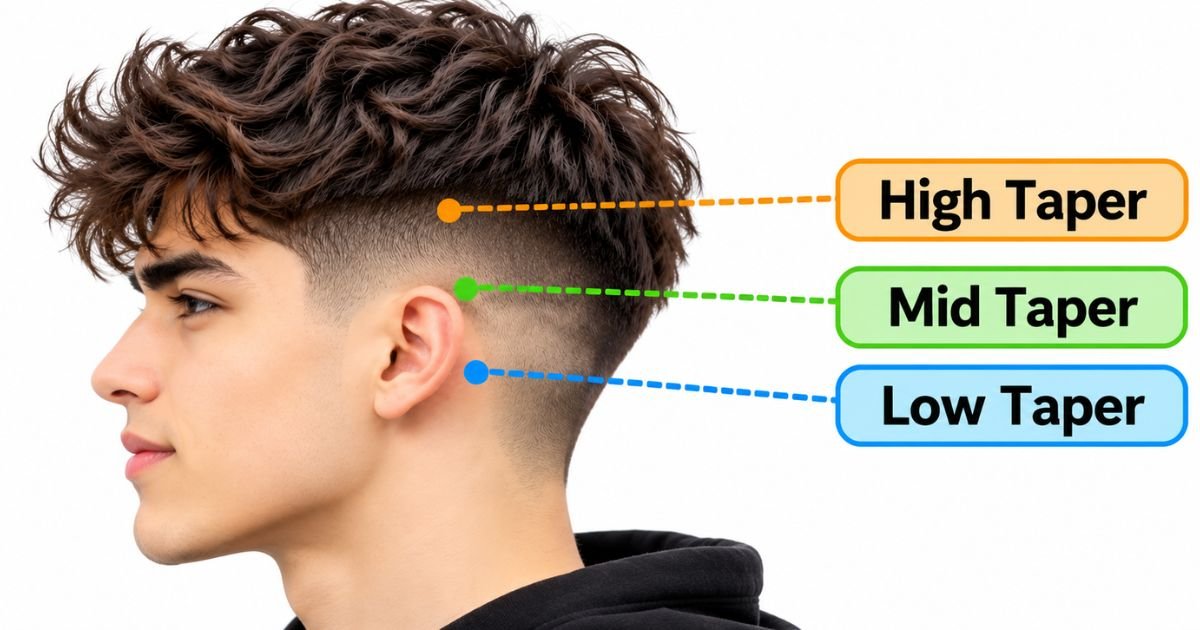
Seeing all three heights together makes the choice easier.
| Feature | Low Taper | Mid Taper | High Taper |
| Blend starts | Near ears and neckline | Middle of the sides | High on the sides, near the temple |
| Look | Subtle | Balanced | Bold |
| Workplace | Very safe | Safe | Depends on dress code |
| Upkeep | Lowest | Medium | Highest |
| Head shape | Soft | Defined | Strongly defined |
Low taper: Choose it when you want to keep most of your side hair. It is calm and neat.
Mid taper: Choose it when you want a clear shape and a polished look. It is the all-rounder.
High taper: Choose it when you want a strong, athletic outline. It shows the most skin and needs the most care.
A simple way to decide is to picture a line around your head. A low taper puts that line below the ear. A mid taper puts it at the ear. A high taper puts it above, near the temple.
Frequently Asked Questions
What is the difference between a low taper fade and a mid taper fade?
A low taper starts near the ears and neckline for a subtle blend. A mid taper starts at the middle of the sides for more shape.
Which is better, a mid taper fade or a mid fade?
A mid taper is softer and easier to keep. A mid fade is sharper and needs more frequent touch-ups.
Is a mid fade the same as a mid taper fade?
No. A mid fade usually drops to skin, while the taper version keeps a short layer of hair at the bottom.
Is a low taper fade professional?
Yes. It is one of the safest cuts for a conservative workplace because it looks clean and natural.
Which fade is the lowest maintenance?
The low taper. It grows out gently and often stays neat for three to four weeks.
How often should I get a mid fade touch-up?
Every two weeks keeps the lines crisp. Some people stretch to three weeks.
What guard number is used for a taper fade?
Most barbers fade from a Guard 4 or 3 down to a Guard 1 or 2. The exact numbers depend on your hair and the look you want.
Does a taper fade suit curly hair?
Yes. The short sides make the curls on top stand out. Ask for a longer top to show the curl pattern.
Which fade suits a round face?
A mid taper or a mid skin fade often works well. Both remove width from the sides and add height.
Which fade suits a long face?
A low taper usually works best. It keeps width on the sides and avoids stretching the face.
Can I grow out a fade easily?
A low taper grows out the easiest. A mid skin fade shows regrowth fastest because of the skin-close section.
What should I say to my barber for a mid taper fade?
Say, “Mid taper fade, starting at the middle of the sides, with a Guard 1 or 2 at the bottom.” Bring a photo.
Conclusion
Choosing between a low taper fade, a mid taper fade and a mid fade is mostly about three things: how bold you want to look, how much time you want to spend on upkeep, and what suits your hair and face.
The low version is gentle and easy. The mid taper is balanced and flexible. The skin version is sharp and modern but needs the most attention.
Before your next visit, pick your starting height, decide between taper and skin, and bring a clear reference photo. Then trust a barber who understands your hair texture. A good conversation in the chair is worth more than any trend.
If you are still unsure, book a mid taper first. It gives you shape, flexibility and room to adjust next time.
