


A low taper fade is a haircut where the sides and back get shorter in small steps, starting just above the ear and ending at the neckline and sideburns. The hair on top stays longer. The result looks clean, but it never looks harsh.
That is why barbers see this cut so often. It works for school, the office, the gym and a night out. It also works with almost every top style, from a buzz cut to a pompadour.
This guide covers what the cut is, how it differs from a mid or high taper, 21 ways to wear it, and what to tell your barber. You will also find advice by hair type, face shape and age, plus a simple upkeep routine.
Quick answer: Ask for a low taper fade if you want a neat, subtle finish with more weight on the sides than a high fade gives you. Ask for a mid taper if you want more contrast.
Low Taper Fade Explained: What It Is and Who It Suits
A low taper fade is a barber haircut built on gradual hair blending. The barber starts the blend low on the head, near the ear and the back of the neck. From there, the hair gets longer as it moves up.
Think of it as a soft slope, not a steep drop. Most of the side and back keeps some length. Only the edges get really short.
The Parts of the Cut
A good low taper has four clear parts:
- The blend starting point: a low line that sits around the top of the ear and curves toward the nape
- Tapered sideburns: the hair in front of the ear thins out and ends cleanly
- A clean neckline: the back edge is shaped, either rounded, squared or natural
- Hairline detailing: the temples and forehead edge get tidied with a trimmer
Who It Suits
This cut suits most men. It works on straight, wavy, curly and coily hair. It works on oval, square and heart-shaped faces right away, and it can be adjusted for round, oblong and diamond shapes.
It is a strong pick if you want a professional haircut that does not look stiff. If you want a very bold, high contrast look, a higher fade will deliver more.
Why the Low Taper Fade Is Everywhere in 2026
Several 2026 trend roundups list the low taper among the top men’s haircuts of the year. Stylists keep describing it the same way: versatile, easy to wear and easy to adapt. Search interest for the term has stayed steady since 2025.
There are a few real reasons for this.
- It sits between two worlds. It looks sharper than a plain scissor cut, but softer than a skin fade.
- It grows out well. Because the blend is low and gradual, a growing-out taper does not turn messy overnight.
- It fits the texture trend. Textured crops, curtain-style fringes and natural curls are all popular. A low taper keeps the sides tidy so the top can do the talking.
Low Taper vs Mid Taper vs High Taper: The Real Difference
The difference is where the blend begins and how much hair gets removed. Many people mix up “taper” and “fade,” so start there.
A taper shortens the hair gradually and usually leaves some length at the end. A fade blends down to very short hair or skin. A taper fade combines both ideas, and the height tells you where it starts.
Taper vs Fade in Plain Words
- Taper: subtle, gradual, mostly around the edges
- Fade: stronger contrast, often down to skin
- Taper fade: a gradual blend with a clear start line
Side by Side Comparison
| Feature | Low Taper | Mid Taper | High Taper |
| Blend starts | Near ear and nape | Around temple level | High on the head, above the temple |
| Contrast | Soft | Medium | Strong |
| Hair left on sides | Most | Some | Least |
| Look | Classic, understated | Balanced | Bold, sharp |
| Grows out | Gently | Fairly well | Quickly looks uneven |
| Best for | Office, school, everyday | Most casual styles | Fashion-forward looks |
Fade height changes the whole mood. A lower start keeps the cut quiet. A higher start pulls the eye toward the top and makes the hairstyle feel sharper.
Should You Get a Low Taper or a Mid Taper?
Pick the low taper if you want the safest, cleanest option. Pick the mid taper if you want a visible fade without going extreme.
Use this quick check:
- Do you work in a conservative setting? Choose low.
- Do you want the fade to be a feature? Choose mid.
- Do you dislike frequent barber visits? Choose low. It tolerates longer gaps between cuts.
- Is your face round? A mid taper can add height and slim the look.
If you are unsure, start low. You can always go higher next time. You cannot add hair back.
Low Taper Fade: Honest Pros and Cons
No haircut is perfect. Here is the fair picture.
Pros
- Works with nearly every top style and hair type
- Looks neat in formal and casual settings
- Grows out more gracefully than higher fades
Cons
- The fade can look soft, so it may not satisfy someone who wants strong contrast
- Neckline and sideburns lose their sharpness in two to three weeks
- Needs a skilled barber, because a low blend leaves less room to hide mistakes
21 Best Low Taper Fade Styles: The Gallery
The gallery has 21 numbered styles, followed by four extra variations for common hair problems. Each one says who it suits and how to style it. Hair length on top is the main thing that changes between them.
Classic and Clean
These cuts are safe, neat and easy to maintain.
1. Low Taper Fade (The Classic)

This is the base version. The sides taper low, and the top is about two to four inches long. Comb it forward or to the side with a little cream.
Best for: first-timers and anyone who wants a no-risk cut.
2. Low Taper Fade with Side Part

A defined part gives the cut a polished, office-ready shape. Your barber can shave a hard part line for extra sharpness.
Best for: professionals and square or oblong faces.
3. Low Taper Fade with Comb Over
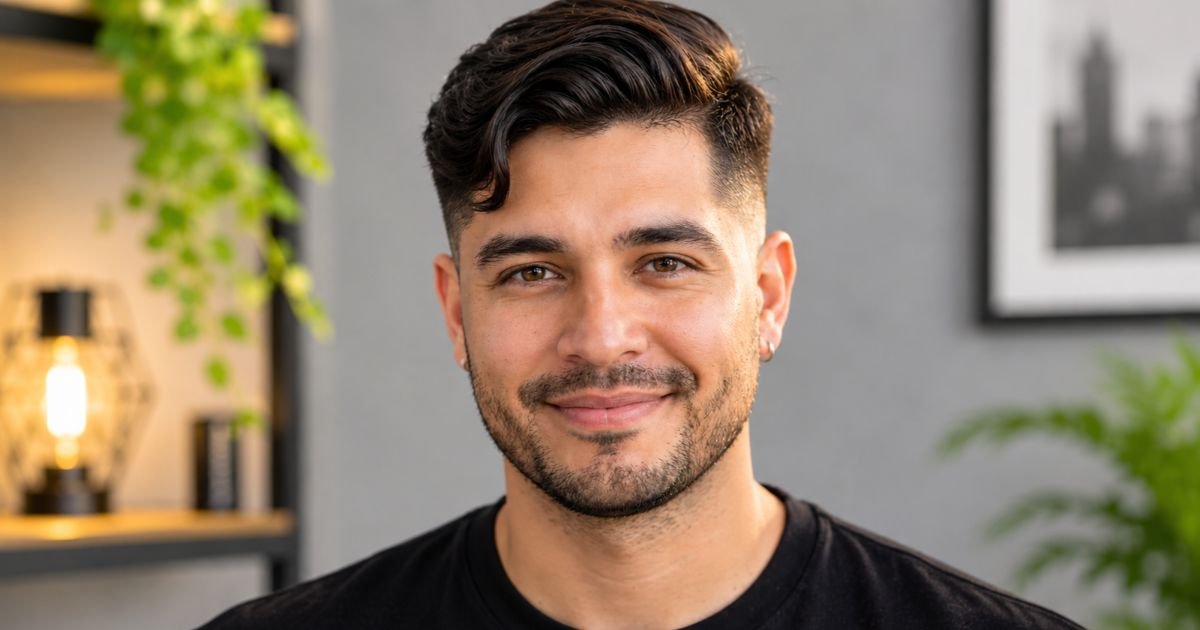
The top is combed to one side with a smooth line. It looks more refined than a basic side part because the hair lies flatter.
Best for: straight and wavy hair, formal events.
4. Low Taper Fade with Buzz Cut

Here the top is cut short with a guard, often a 2 to 4. The taper still runs lower on the sides, so the cut does not look like a flat military buzz.
Best for: men who want the lowest effort and a clean outline.
Textured and Modern
These styles add movement and a more current look.
5. Low Taper Fade with Textured Top

The barber point-cuts the top to create layers. You then use matte clay to separate the pieces. The mix of a clean base and a rough top feels very 2026.
Best for: fine to medium hair, and anyone who wants volume without effort.
6. Low Taper Fade with Messy Top

This is a looser version of the textured style. Think of hair that looks slept in, but on purpose.
Best for: casual days, students and wavy hair.
7. Low Taper Fade with French Crop
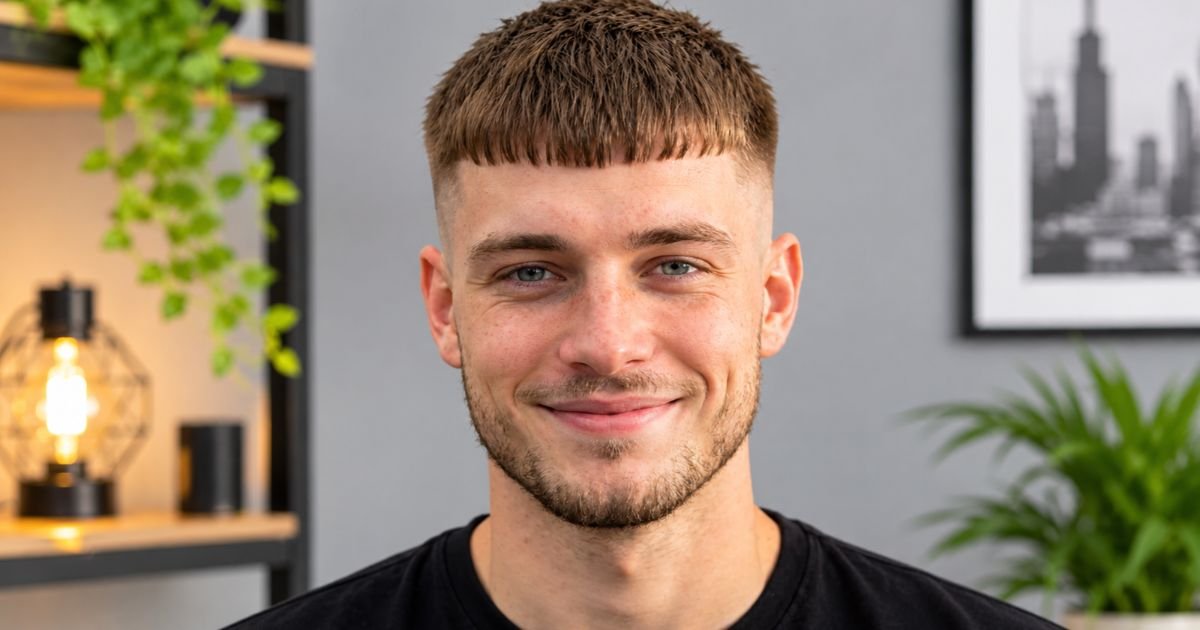
The French crop has a short, blunt fringe cut straight across the forehead, and a short, textured top. With a low taper, it stays soft at the sides. It is easy to style and hides a receding hairline well.
Best for: thick or wavy hair, and men with a high forehead.
8. Low Taper Fade with Fringe

A longer front section falls onto the forehead. The fringe can be straight, swept or choppy. Ask for texture in the fringe so it does not look heavy.
Best for: oblong faces and wavy or straight hair.
Volume and Length
When the top is longer, the low taper keeps it from looking bulky.
9. Low Taper Fade with Quiff

The front is lifted up and back, and the sides stay tight. A blow dryer and a strong-hold cream do most of the work. Do not let the top get too short, or the lift will not hold.
Best for: round and oval faces, medium to thick hair.
10. Low Taper Fade with Pompadour

The pompadour has more height and shine than a quiff. The low taper keeps the base subtle so the height looks deliberate.
Best for: thick, straight hair and men who like a vintage feel.
11. Low Taper Fade with Blowout

A blowout uses a dryer and brush to push the top up and back with soft volume. It works well on medium-length hair. A vent brush makes this much easier.
Best for: straight and wavy hair that tends to lie flat.
12. Low Taper Fade with Slick Back

The top is combed straight back with gel or pomade. The low taper stops the sides from looking bulky.
Best for: formal settings and medium to thick hair.
13. Low Taper Fade with Long Top

When the top reaches four to six inches or more, the low blend keeps it tidy. You can wear it down, pushed back or tied up. Ask for layers to remove weight, especially on thick hair.
Best for: men growing their hair out and wanting structure.
Curls, Coils and Natural Texture
Textured hair looks great with a low blend. The taper frames the curl pattern.
14. Low Taper Fade with Curly Top

The curls stay natural on top while the sides are clean.
Best for: wavy to curly hair, round and oval faces.
15. Low Taper Fade with 360 Waves

The sides and back are brushed into wave patterns, and the low taper creates a soft frame at the edges. This style depends on a regular brushing routine and a durag at night. The cut and the waves must work as a team.
Best for: coily hair types and men committed to the routine.
16. Low Taper Fade with Afro

The afro keeps its full shape, and the taper cleans the edges.
Best for: 4C hair and natural hair lovers.
17. Low Taper Fade with Locs

Locs sit on top, and the sides are tapered neatly. This lets the locs stand out while keeping the neck and ears tidy.
Best for: men with starter, short or long locs.
18. Low Taper Fade with Braids

Cornrows, box braids or twists work on the top. The tapered sides give a crisp contrast.
Best for: coily hair and protective styling fans.
Bold Statements
These styles make the cut louder.
19. Low Taper Fade with Faux Hawk

The center hair is brushed upward into a ridge, while the sides stay shorter. A low taper makes the faux hawk look less extreme than a high fade would.
Best for: men who want an edge in a subtle package.
20. Low Taper Fade with Beard

A low taper can run straight into a beard. The barber fades the sideburn into the beard so there is no sharp line. Keep the beard shaped with a clean cheek line and neckline.
Best for: anyone with a full or short beard, and square or round faces.
21. Low Taper Fade with Modern Mullet

The top and front stay short to medium, while the back grows longer and falls over the neck. The low taper keeps the sides clean so the mullet looks styled, not messy. Ask for layers and a soft, natural neckline. A light sea salt spray adds texture.
Best for: wavy, thick or curly hair and men who want a trend-led look.
More Low Taper Variations
These are not extra numbered styles. They are tweaks that solve common problems.
Low Taper Fade for Straight Hair

Straight hair shows every line, so ask for texture on top. Without it, the top can look flat. A sea salt spray gives grip.
Short Low Taper Fade Crop
Keep the top about one to two inches, cut with scissors or a number 4 guard, and add a textured finish. This version is great for a fast morning routine.
Medium-Length Low Taper Fade
Leave three to four inches on top. This gives you room to switch between a side part, a quiff and a messy look in the same week.
Low Taper Fade for Thin Hair
Keep the top at medium length and ask for light layers. Avoid heavy products. A matte powder or a light cream adds weight without weight. A short, textured top often looks thicker than a long one.
Choosing Your Low Taper Fade: Hair Type Breakdown
Hair texture decides how the top behaves, how often you need a cut and which products work. Use this section to match your style to your hair.
Curly Hair

Curls shrink when dry, so ask your barber to cut the top slightly longer than you want. Request a low taper with the guard number kept at 2 or 3 at the edges so the blend looks soft. Curl cream is your best friend here.
Straight Hair

Straight hair lies flat easily. A textured top, quiff or French crop adds shape.
Wavy Hair

Wavy hair is the easiest to style. It has natural movement and holds a messy or fringe look well. Use sea salt spray and let it dry naturally for the best result.
Coily and 4C Hair

Coily and 4C hair holds a crisp taper line very well. This is why waves, afros, locs and braids look so sharp with it. Moisture is the main care point. Use a light oil or leave-in cream, and avoid pulling the hair when styling.
Thin or Fine Hair

Fine hair does best with a short or medium top and plenty of texture. Hair density matters more than strand width. If your hair is thin in density, keep the top short and avoid slick styles that show the scalp.
Who Should Modify, or Skip, a Low Taper?
A low taper is not right for everyone. Consider changing it if you have heavy scalp show-through on top, a very narrow face, or strong cowlicks at the nape. Choose a shorter even cut, a softer blend or a natural neckline. If you want a very graphic look, go mid or high.
If you fall into one of these groups, talk to your barber before the first cut.
Low Taper Fade by Face Shape: What Works
Face shape guides how much height and width you want. Treat the tips below as a starting point, not a rule.
Oval Faces

Oval faces are balanced, so you can try nearly any look. A classic low taper with a side part is a safe place to start.
Round Faces
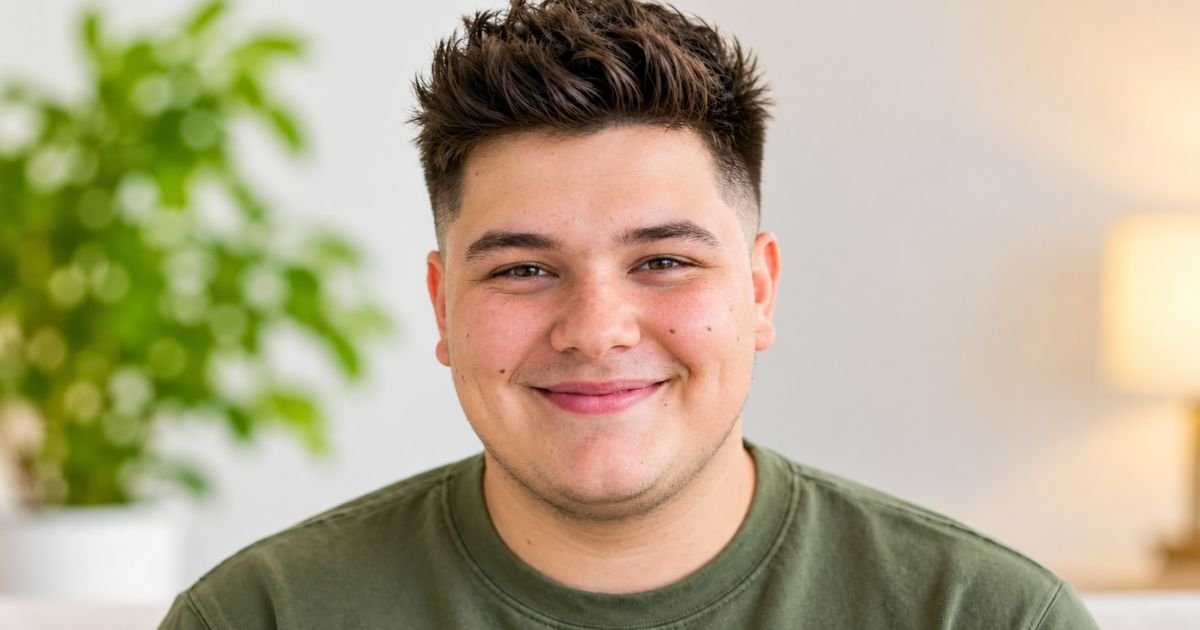
Add height on top, and keep the sides fairly controlled. A quiff or pompadour pulls the eye upward and makes the face look longer.
Square Faces

Square faces have a strong jaw. A softer, textured top balances it. A side part works well too.
Heart Faces

A fringe covers a wider forehead and brings balance to a narrow chin. A beard can also add visual weight to the jaw.
Oblong Faces

Avoid too much height. A French crop or a fringe shortens the look of a long face.
Diamond Faces

A fringe or textured top softens the cheekbones and adds width at the forehead.
Low Taper Fade by Age: Teens to Professionals
Age does not change the cut, but it changes the goals.
Teenagers
Teens often want something trendy that still meets school rules. A low taper with a textured top or a messy top fits both. Keep the top within the school’s length limit if there is one.
Men in Their 20s and 30s
This group usually wants versatility. A medium-length cut lets you go from work to the weekend. Try a quiff or a French crop with matte clay.
Professional Men Over 35
A neat, office-friendly hairstyle matters here. A low taper with a side part or a short crop looks sharp and mature. If you have grey hair, a clean low blend makes the grey look intentional. If the hairline is receding, a textured crop is a smart choice.
How to Ask Your Barber for a Low Taper Fade: Exact Scripts
Barbers are skilled, but they cannot read minds. A short, clear request works better than a long one. Always bring a haircut reference photo, and say what you like about it.
Two Scripts You Can Use
Script 1: The classic
“I’d like a low taper fade. Start the blend just above my ear, keep the sideburns tapered, and clean up the neckline. Leave about three inches on top, and I’d like a side part.”
Script 2: For curls or coils
“I want a low taper fade that frames my curls. Don’t go too high. Keep the line soft around the ears, and shape the neckline naturally. Leave the top long enough to hold the curl.”
Helpful Words to Know
- Guard numbers: a number 1 leaves about 3 mm, a 2 leaves about 6 mm, a 3 leaves about 10 mm, and a 4 leaves about 13 mm. Guard 0 and guard 0.5 cut very close.
- Blend starting point: where the fade begins
- Neckline: the shape at the back, rounded, squared or tapered
- Shape-up: a crisp line along the forehead and temples
Should You Ask for Skin or Shadow at the Bottom?
A skin fade goes to bare skin at the lowest point. A shadow fade stops just short of skin, so you see a faint shade of hair.
- Choose skin if you like a sharp, high-contrast look and don’t mind more upkeep.
- Choose shadow if you want a softer finish that grows out more smoothly.
For this cut, shadow is a common choice because it keeps the cut understated. If you are unsure, ask for a shadow and tell your barber you may go lower next time.
Low Taper Fade Tutorial: Video Walkthrough
If you are a barber student or a home cutter, a video helps more than words. Look for a tutorial that shows these steps in order:
- Finding the fade line and setting the top guard
- Stepping down with shorter guards or a lever
- Flicking the clippers out to avoid hard lines
- Cleaning the neckline and sideburns with a trimmer
A word of caution: Cutting your own fade is hard. The back is the toughest part, and mistakes show. If you try at home, start with longer guards and go slowly.
Low Taper Fade Mistakes: 6 Ways Men Get It Wrong
- Starting the blend too high. A mid or high start turns a low taper into something else. Point to your ear when you explain it.
- Asking for “short sides” only. That means different things to different barbers. Use guard numbers or a photo.
- Skipping the top length. The top length changes the whole look. Always say how long you want it.
- Ignoring your hair type. Straight hair and 4C hair need different cutting methods.
- Overloading on product. Too much pomade makes a taper look greasy and flat.
- Waiting too long between cuts. The edges blur, and the neckline grows out. A quick trim every two to four weeks keeps things sharp.
Detail Hair Trimmer
A detail trimmer is a small, narrow-bladed tool for edges. It cleans the neckline, sideburns and hairline between barber visits. Look for a close-cutting blade and a light, cordless body.
Use it only on the edges. Do not try to fix the blend itself with it.
Maintaining a Low Taper Fade: The Real Routine
Upkeep is simple, but it is not zero. Here is a realistic plan.
Every day (two to five minutes):
- Dry the top with a towel, or a blow dryer for volume
- Apply a small amount of product, style, then leave it
Every two to four weeks:
- Visit your barber for a refresh
- Ask for a quick neckline and sideburn cleanup, which costs less in many shops than a full cut. Prices vary by city and shop, so check with yours.
Is a Low Taper Fade Really Low Maintenance?
Yes and no. Day to day, it is easy. You do not need much product or time. But to keep the edges sharp, you need regular trims.
A low taper looks decent for longer than a high fade, but you will still see the neckline soften after about two weeks. If you can only go every six weeks, choose a shadow bottom and a natural neckline. These grow out with less drama.
Cordless Hair Clipper with Guards
A good clipper with guards handles small touch-ups and beard blending. Look for guards from 1 to 8, an adjustable lever and at least an hour of battery life.
Do not use clippers to start a fade at home unless you are comfortable with them. They are better for maintenance, like evening out the sides and removing grown-out hair at the nape.
Matte Styling Clay / Pomade
Match the product to the top. Use matte clay or paste for textured tops and French crops, pomade for side parts and slick backs, and a strong-hold pomade for quiffs and pompadours. Fine hair does better with a light cream or powder.
Use a pea-sized amount first. Warm it in your palms, then work it from the back to the front. You can always add more.
Also Read This : Mid Taper Fade Slick Back
Curl Cream
Curl cream defines curls and fights frizz. It is a must for a curly top, an afro or short twists.
Apply it to damp hair, scrunch upward and let it air dry. Skip formulas with heavy alcohols, which dry the hair.
Vent Brush
A vent brush has open channels that let air pass through. Use it with a dryer on medium heat to lift the top of a quiff or blowout without tugging.
Low Taper Fade Short Hair
Short hair is the easiest place to start. Keep one to two inches on top, and ask for light texture. A short low taper gives you a neat look in under a minute of styling. It is ideal for hot weather, busy mornings and gym days.
Modern Low Taper Fade
The modern version leans on texture and movement. Think of a choppy fringe, a longer top with layers, or a soft crop with natural flow. The taper stays low and the finish stays matte. It looks current without relying on one trend.
Low Taper Fade Curly Hair
For curly hair, leave extra length on top so curls can form. Keep the taper soft at the sides. Hydrate often, and use a curl cream instead of a stiff gel.
Low Taper Fade Wavy Hair
Wavy hair gives you a built-in texture. A low taper with a messy top, a fringe or a medium-length top suits it best. Sea salt spray and air drying keep the waves natural.
Low Taper Fade Black Male
For Black men, the low taper works well with 4C hair, waves, afros, locs and braids. The key is a skilled barber who knows how to blend coily texture and keep a crisp line. Ask about line-ups and neckline shape. Keep the scalp moisturized and protect the hair at night with a satin cap or durag.
Low Taper Fade FAQs
What is a low taper fade?
It is a haircut where the sides and back get shorter in gradual steps, starting low near the ear and neckline, while the top stays longer.
What is the difference between a low taper and a low fade?
A low taper leaves more length at the bottom and looks subtler. A low fade usually blends down to very short hair or skin.
Is a low taper fade the same as a taper fade?
Mostly yes. A taper fade is the general term, and “low” tells you where the blend starts.
Is a low taper fade better than a mid taper?
Neither is better. Low is softer and more office-friendly, while mid shows more contrast.
What guard number should I ask for in a low taper fade?
Many barbers start around a number 2 to 3 at the top of the blend and go down to a 0.5 or 1 at the bottom. Your barber may adjust this for your hair.
How often should I get a low taper fade touch-up?
Every two to four weeks keeps the neckline and sideburns clean.
Does a low taper fade work for thin hair?
Yes. Choose a short or medium top with texture, and use light products.
Can I get a low taper fade with curly hair?
Yes. Keep the top longer so curls have room to form, and ask for a soft blend.
What face shape suits a low taper fade best?
It suits oval, square and heart-shaped faces right away. Round, oblong and diamond faces can wear it with the right top style.
How much does a low taper fade cost?
Prices vary by city, shop and barber, so ask before you sit down.
Conclusion
This cut lasts because it is simple. It gives you a clean edge, a soft blend and a lot of room to play on top.
Start by choosing the length you want on top. Then match it to your hair type and face shape. Bring a photo, use clear words and guard numbers, and be honest about how often you will visit the barber.
Keep a detail trimmer at home for the edges. Pick one styling product that fits your texture. Do that, and your haircut will look sharp from the first day to the last.
Save this guide, pick one of the 21 styles, and show it to your barber at your next visit.
